Best Brain Supplement Gummies vs Capsules: Dose and Sugar Reality
The short version
Even the best brain supplement gummies carry considerably less active ingredient than an equivalent capsule, because most of a gummy's weight is gelling agent, sweetener, water and flavouring. Expect added sugar or sugar alcohols in every serving, a format that degrades faster than a dry powder, and label amounts skewed towards small, palatable nutrients rather than the gram-scale ingredients that dominate the research.
- Physical ceiling: a gummy weighs a few grams and only a small fraction of that can be active without ruining the texture or the taste.
- Read the panel per serving: added sugars must be declared, and a "serving" is often two or three gummies.
- Stability: a moist, sugary matrix is harder on some ingredients than a sealed dry capsule, which is why overages exist.

Why even the best brain supplement gummies carry less
The gummy category exists because a large number of people will not reliably swallow a capsule, and that is a real problem worth solving. But the solution comes with a formulation constraint that no amount of marketing removes, and it is worth understanding before you compare two products on their front labels.
A gummy is a confection first. Its structure comes from gelatin or pectin, its bulk from sugars or sugar alcohols, and its palatability from flavouring, acidulants and colour. Those components are not optional — take them out and you no longer have a gummy. Whatever space remains after the confectionery has done its job is what the active ingredient gets, and it is not much.
A capsule has the opposite architecture. The shell — hypromellose in vegetarian products, gelatin in others — is a thin container that contributes almost nothing but its own weight, and essentially everything inside is powder. That is why gram-scale amino acids, standardised botanical extracts and anything measured in hundreds of milligrams are sold as capsules, tablets or powders, and almost never as sweets.
The physical limit: what actually fits inside a gummy
Put rough numbers on it and the picture sharpens. A typical supplement gummy weighs a few grams. Of that, the gelling system, sweeteners and water account for the overwhelming majority, which leaves room for an active load usually measured in milligrams rather than hundreds of milligrams.
Compare that with a standard capsule. A size 0 shell holds roughly four to five hundred milligrams of a typical powder and a size 00 holds appreciably more, all of it available for the formula. The gap between the two formats is not a matter of degree; it is a different order of magnitude.
Taste is the second constraint, and it bites hardest on exactly the ingredients this category cares about. Many amino acids are unpleasantly bitter, botanical extracts are worse, and B vitamins carry a strong flavour of their own. Masking those flavours takes yet more sweetener and flavouring, which takes yet more of the available mass. The result is a category that gravitates naturally towards ingredients that are potent in microgram or low-milligram amounts — vitamin D, B12, biotin, folic acid — and away from anything you would need to measure in grams.
A gummy is a sweet that happens to carry a supplement. A capsule is a supplement that happens to need a container. The difference decides what can go in each.
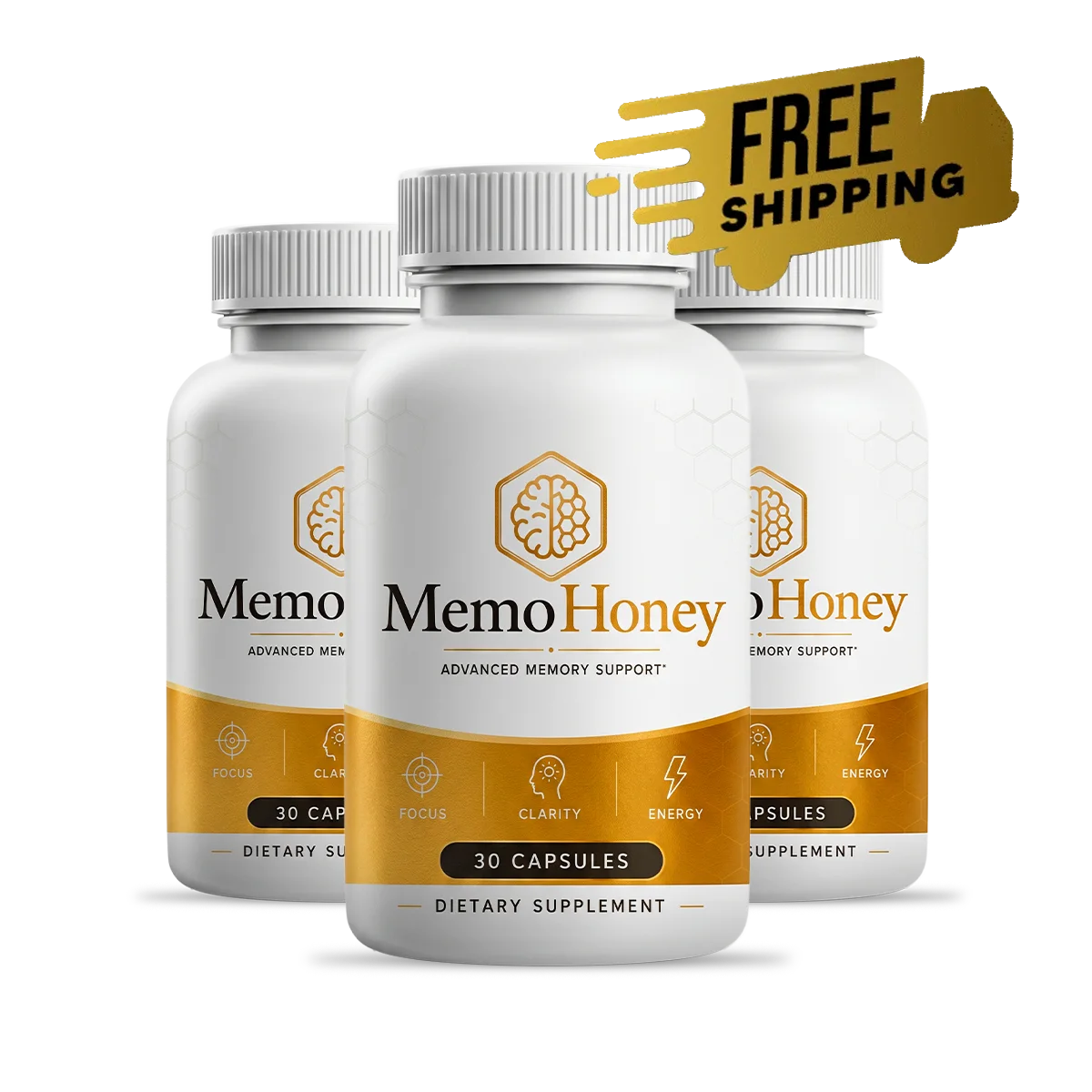
One capsule, no sugar, numbers on every row
MemoHoney is a once-daily vegetarian capsule with no added sugar and no sweeteners — seven label rows, seven numbers. If you are working out where to buy brain supplements in a format you will actually finish, the current package options and the 60-day guarantee are on the official store.
Get OfferAdded sugar and sugar alcohols, per serving
Added sugars have to be declared on the Supplement Facts or Nutrition Facts panel, which makes this the easiest thing on the whole label to check. Two habits will keep you honest about it.
First, read the figure per serving, not per gummy. A great many products define a serving as two or three gummies, so the number on the panel is already a multiple of what one sweet contains — and if you take the upper end of a "two to three daily" instruction, it climbs again.
Second, put the number in the context of a whole day rather than judging it alone. A few grams of added sugar in a daily supplement is not, on its own, a nutritional catastrophe. It is also not nothing, particularly for anyone managing blood sugar, anyone whose diet is already sugar-heavy, or anyone taking several gummy products at once — a stack of three gummy supplements is a small confectionery habit with a health label on it. There is a dental angle too: chewy, sugary products spend longer in contact with teeth than a swallowed capsule does.
Sugar-free versions swap in sugar alcohols, most often maltitol, sorbitol or xylitol. These cut the sugar figure genuinely, and they bring their own trade-off: sugar alcohols are incompletely absorbed and can cause bloating, wind or loose stools, with individual tolerance varying a great deal. One serious household note — xylitol is toxic to dogs, and a jar of sweet-tasting supplements is exactly the sort of thing a dog will help itself to.
The child-safety point deserves its own sentence. Gummies look, smell and taste like sweets, because that is the design brief. Every jar belongs out of reach and closed, and this is doubly true of anything containing iron.
Stability: why the label amount and the amount left over differ
This is the least discussed difference and arguably the most important one.
A capsule is a dry, low-moisture environment, usually sealed in a bottle with a desiccant and an induction seal. A gummy is the opposite: moist, sugary and oxygen-permeable, often packed in a jar that gets opened daily in a warm kitchen. Moisture, heat, light and oxygen are the four classic enemies of nutrient stability, and a gummy hands three of them an open door.
Manufacturers know this and compensate with overages — deliberately adding more than the label states at production, so that the declared amount is still present at the end of shelf life. That is legitimate and common practice, but it has two consequences for a buyer. The amount you receive is not a fixed quantity across the life of the jar, and a product that has been stored badly — a hot delivery van, a sunny windowsill, a humid bathroom cabinet — can drift further and faster than a capsule would.
Some ingredients tolerate the format better than others. Fat-soluble vitamins and robust minerals generally survive. Omega-3 oils oxidise and go rancid, which is why fish-oil gummies so often taste of it. Live probiotic organisms are a poor fit for a warm, moist confection altogether. It is worth asking what a given gummy is being asked to protect before assuming the number on the front is the number in your mouth.
The two formats side by side
Everything above in one place, with the buying implication for each row. Amounts are typical ranges for the formats, not figures for any particular product.
| What you are comparing | Gummy | Capsule | Why it matters when buying |
|---|---|---|---|
| Weight of one unit | A few grams, mostly base | A fraction of a gram, mostly powder | Sets the physical ceiling on the dose |
| Typical active load | Milligrams to low hundreds of milligrams | Up to several hundred milligrams and more per capsule | Decides whether a studied dose is reachable at all |
| Units needed for a gram-scale dose | Impractical — many units, plus their sugar | One to three capsules in most formulas | Amino-acid and extract formulas rule gummies out |
| Added sugar or sugar alcohol | Present by design; declared on the panel | None | Matters for blood sugar, teeth and multiple-gummy stacks |
| Bitter ingredients | Need masking, which costs more space | Irrelevant — the shell hides the taste | Explains which ingredients each format attracts |
| Stability over shelf life | Moist and warm; overages used to compensate | Dry and sealed; generally more stable | Affects what is actually left near the expiry date |
| Other ingredients | Gelatin or pectin, sweeteners, colours, acidulants | Usually a shell plus a flow and anti-caking agent | Relevant for allergens, vegetarians and additive avoidance |
| Adherence | High — people enjoy taking them | Lower for anyone who dislikes swallowing capsules | The one column where gummies genuinely win |
| Cost per studied dose | Usually poor for anything gram-scale | Usually better, but depends entirely on the panel | The number that should settle the argument |
That last row is the one to sit with. The method for filling it in is straightforward arithmetic, and we set it out step by step in our guide to cost per studied dose. Run it on a gummy carrying a fraction of a studied amount and the multiplier becomes uncomfortable very quickly.
Where gummies genuinely win
None of this makes gummies a scam, and it would be dishonest to leave the impression that it does. There is a real case for them, and it rests on one column of the table above.
Adherence beats theoretical dose. A gummy you take every morning is worth more than a capsule sitting unopened in a cupboard because you gag on it. Difficulty swallowing is common, and it is a legitimate reason to accept a smaller dose in a format you will actually use.
Small-dose nutrients suit the format. Vitamin D, vitamin B12, folic acid and iodine are all effective in microgram or low-milligram amounts, which fits comfortably inside a gummy's mass budget. For these, the format penalty is close to zero.
Children and older adults. For anyone who cannot manage a capsule at all, a gummy version of a genuinely needed nutrient, chosen with a clinician, is a sensible compromise rather than a concession.
Where the case collapses is precisely where this category makes its noise: gram-scale amino acids, standardised botanical extracts and anything whose research is built on hundreds of milligrams a day. Those simply do not fit.
What this means for a capsule formula like MemoHoney
MemoHoney sits on the capsule side of the trade and it is a reasonable illustration of why the format exists. It carries 640 mg of amino acids across four forms in a single once-daily capsule — L-arginine and L-arginine AKG, L-citrulline HCl and L-citrulline malate — plus beta-alanine and niacin. That amino-acid load alone would not fit into a gummy, and the taste-masking required would make the attempt absurd.
The other ingredients are correspondingly plain: a hypromellose vegetable shell, vegetable stearate and silicon dioxide. No sugar, no sweetener, no colour, no flavouring. That is a real advantage of the format, and it is worth counting when you compare panels.
We would rather be even-handed about the amounts themselves, as we are elsewhere on this site: the niacin at 47% of the Daily Value sits in a meaningful range, the arginine and citrulline totals are honest but below the gram-scale doses used in most published trials, and the beta-alanine at 40 mg is a trace against research protocols measured in grams. The format is the right one for the job; the amounts are a separate question, and our guide to reading a Supplement Facts panel shows how to answer it for any product you are considering.
What choosing a format cannot do for you
Format is a delivery question, and it is easy to over-invest in it.
It cannot make a weak ingredient work. A gummy and a capsule containing the same under-dosed extract are equally unlikely to do anything. Format decides how much can be delivered, not whether the compound was worth delivering.
It cannot make any supplement a treatment. Nothing in this category diagnoses, treats, cures or prevents any disease, in any format. If your memory or concentration has changed noticeably, that is a conversation with a doctor rather than a choice between a jar and a bottle.
It cannot substitute for reading the panel. Plenty of capsules hide their amounts inside a proprietary blend, which is a worse offence than any amount of sugar. A transparent gummy beats an opaque capsule.
And the evidence base is thin either way. Direct head-to-head trials comparing gummy and capsule versions of the same nootropic ingredient are scarce. Most of what this article describes comes from formulation science and stability principles rather than from clinical outcomes, and we would rather say that plainly than imply a certainty that is not there. Whichever way you decide to buy brain supplements, judge them on the panel, the amounts and the arithmetic — not on the shape they arrive in.
Compare the panel, not the packaging
Every MemoHoney ingredient and every milligram is transcribed in full on our main page, with our notes on which amounts sit in a studied range and which do not — plus the current package options, shipping terms and the 60-day guarantee.
Get OfferFrequently asked questions
Do gummy supplements contain less than capsules?
As a rule, yes. Most of a gummy's weight is gelling agent, sweetener, water and flavouring, so only a small fraction is left for the active ingredient. A capsule is almost entirely powder, which is why gram-scale amino acids and botanical extracts are sold as capsules or powders and almost never as gummies.
How much sugar is in a brain supplement gummy?
It varies by product and it is printed on the panel, where added sugars must be declared. The number to look at is per serving, not per gummy, because many products define a serving as two or three gummies. Sugar-free versions replace it with sugar alcohols such as maltitol or xylitol, which can cause bloating or loose stools in some people.
Are gummies less stable than capsules?
Generally yes. A gummy is a moist, sugary, oxygen-permeable matrix, and heat and humidity accelerate the breakdown of some ingredients inside it. Manufacturers compensate by adding overages at production, which means the amount present near the end of shelf life can be lower than at the start.
Is there any good reason to choose gummies?
Yes — if you cannot or will not swallow capsules, a gummy you take daily beats a capsule you avoid, and adherence is the largest single predictor of whether any supplement does anything. Gummies suit small-dose nutrients such as vitamin D or B12, and are a poor vehicle for anything needing hundreds of milligrams or more.
References
- NIH Office of Dietary Supplements — Multivitamin/mineral supplements fact sheet.
- National Institute of Dental and Craniofacial Research (NIH) — Tooth decay.
- Mayo Clinic — Added sugar: What you need to know.
- Harvard T.H. Chan School of Public Health — Added sugar in the diet.
- PubMed — published literature on gummy supplement stability and content.