MemoHoney Official Website › Articles › Timing
TimingMemoHoney Results: How Long Does MemoHoney Take to Work?
MemoHoney results are not quick: the distributor's own figure is a wait of three to six weeks, and the most common complaint in its review set is wanting more in week one. Nothing in the six named ingredients has an acute effect, since every study behind them ran for days or weeks at gram amounts. Judge the habit over a full month and decide before day 60, when the refund window closes.
Where the figure comes from
The distributor publishes one number about timing: a typical wait of 3–6 weeks. It is a summary figure drawn from its own review set rather than from a trial, and the two complaints that repeat in that set are both about the first week.
That is the whole of the published guidance, and it is more than many products in this category offer. What it does not do is tell a reader what the number means, which is the job of the rest of this article.
MemoHoney is a dietary supplement and not a treatment. Nothing here is medical advice. Memory that has changed in a way you or the people around you have noticed deserves an assessment rather than a purchase, and MedlinePlus sets out what is worth reporting.
Why nothing in this formula acts quickly
Look at what the six named ingredients were actually studied for and how long those studies ran, and the timeline stops being a marketing decision and starts being a property of the ingredients.
| Ingredient | A published study | How long it ran |
|---|---|---|
| L-Citrulline HCL | cerebrovascular function in athletes | Five days at 8.8 g a day, during sprint interval training |
| L-Citrulline Malate | repeated sprint performance | Three days at 8 g a day |
| L-Citrulline Malate | lower-limb function in older women | Six weeks at 3 g a day, alongside exercise |
| L-Arginine AKG | blood flow and plasma arginine | Seven days at 12 g a day |
| Beta-Alanine | hippocampal white-matter measures | Long enough at 2.4 g a day to change a diffusion MRI score |
| Niacin | an observational cohort | Six years of follow-up on dietary intake |
Not one of these is an acute effect a reader would notice at breakfast, and every amount in the middle column is far larger than a shared capsule.
The pattern is consistent. Where these ingredients have been shown to do anything, they were taken daily for days or weeks first, at amounts measured in grams, and the outcome was measured with an instrument rather than felt. A product built from them cannot be a product that works on Tuesday.

Week by week, honestly
Days one to seven
Nothing reliable. If niacin flushing happens at all it happens here, within half an hour of a capsule, and it passes. Everything else in the first week is the effect of having started something, which is real and is not the capsule.
The useful work in week one is logistical: fix the time of day, put the bottle where your hand already goes, and start writing two lines a morning.
Weeks two and three
The habit either attaches or it does not. This is where most abandoned bottles get abandoned, and the fix is placement rather than willpower.
It is also the window where people start looking for a change and finding one, because attention to attention is itself a change in performance. Write it down rather than trusting it.
Weeks three to six
The distributor's stated window. This is the first point at which a judgement is worth anything, and the first point at which the diary from week one becomes interesting to reread.
Bottle two starts in here. A bottle that lasted five weeks instead of four is telling you that the test was not run, whatever the conclusion felt like.
Weeks seven and eight
The refund window closes at day 60 from the date of purchase, and the seller asks for at least 30 days of use before a claim. Decide before the date rather than after it.
That deadline is the single most actionable thing in this article, and the cheapest way to respect it is a calendar reminder set on the day the parcel arrives.
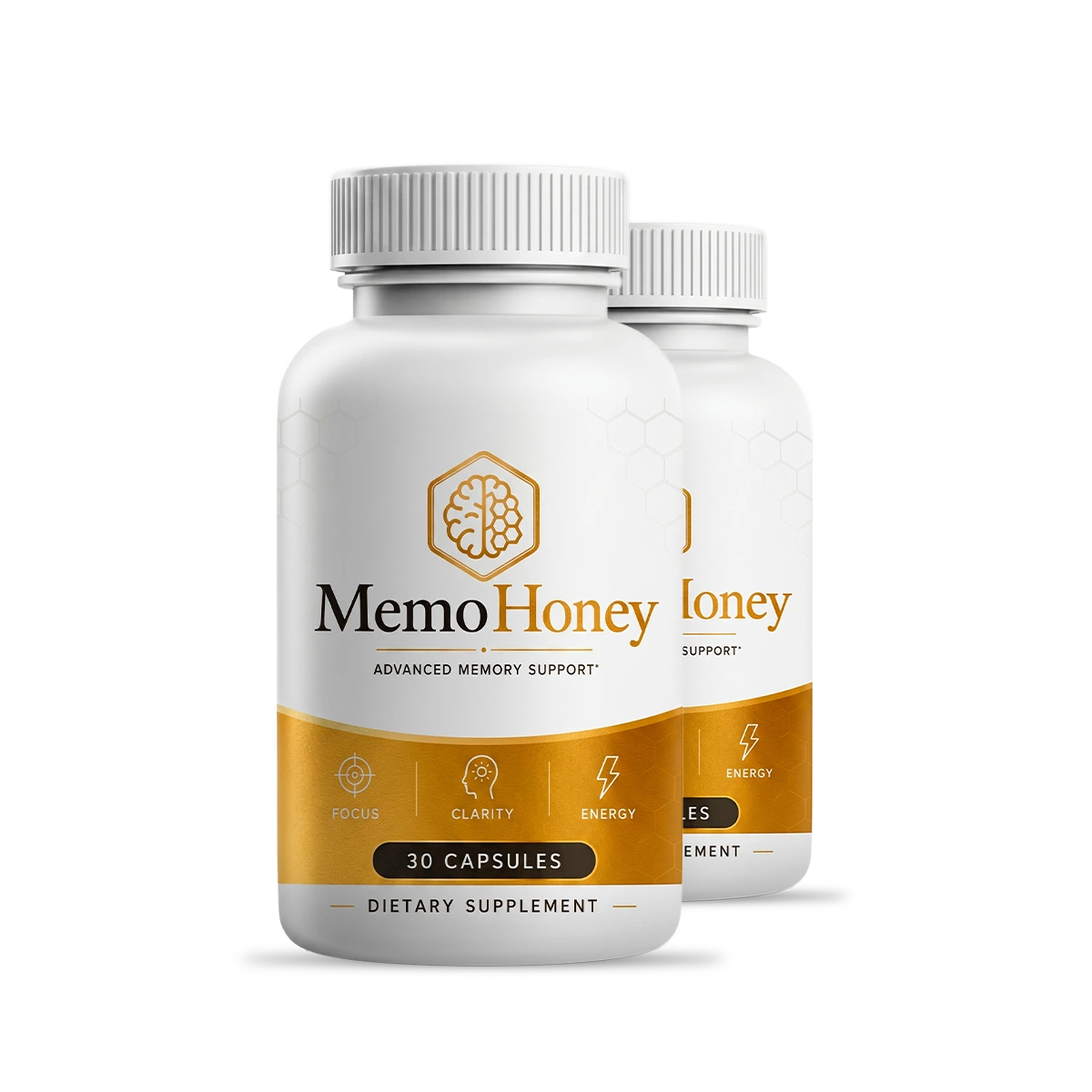
Start the MemoHoney habit with the window in a calendar
Two bottles is sixty capsules and sixty days, which is exactly the length of the guarantee. Three and six bottles trade that alignment for free shipping and a lower price a bottle.
Two bottles $158 · six bottles $294 · 60-day money-back guarantee
Order MemoHoney From This CounterLot MEM-26/ME-7435 · one a day, 30 to a bottle · ships from the United States
Telling a real change from an expected one
Memory is the hardest outcome to self-assess, because the instrument doing the assessing is the thing being assessed. Two practical defences against that, both cheap.
The first is to count rather than feel. Not sharpness: the number of times in a week you walk into a room and forget why, how far into a page you get before rereading, whether the crossword takes twenty minutes or forty. Count them for a week before the first capsule so you have a baseline.
The second is to be honest about what else changed. People who start a supplement often start sleeping earlier and drinking less in the same fortnight, and sleep and memory consolidation is a research field rather than an association. If several things changed, the cheapest candidate gets the credit until there is a reason to move it.
- Count two specific things, not a feeling.
- Take a baseline week before the first capsule.
- Write two lines every morning; it takes twenty seconds.
- Reread week one at the end of bottle two, not at the end of week two.
- Change one thing at a time, or accept that you will not know which one did it.
What would make it faster, and what would not
Taking two capsules instead of one is outside the label and is guesswork stacked on guesswork, since the amounts are not printed. Taking it with food instead of before makes a marginal difference at most. Taking it at a different time every day makes it slower, in the sense that it makes the test worse.
The single largest lever is consistency, and it is not close. Sixty doses in sixty days is a test; forty doses in sixty days is a story. Everything else on the list of things people try is noise by comparison.
The second largest lever is not the capsule at all. Sleep, hearing and blood pressure all act on the outcome being measured and all have randomised evidence behind them. A reader who fixes one of those during the same eight weeks will have a better result and a worse experiment, which is a trade worth making.
The refund window is 60 days. The two-bottle pack is 60 capsules, which is 60 days. Every larger pack puts capsules in your cupboard that the guarantee no longer covers. The pricing page sets out what that buys in return.
What to do if you decide to stop
Stopping is free and immediate. A once-daily supplement has nothing to taper and no rebound to manage; you simply stop, and that is one of the genuine advantages of this format over anything with a pharmacological effect.
If you stop inside the window, call the order desk rather than writing to the website address, which cannot see orders. Ask for a return authorisation before posting anything, put your name and order ID in the box, and send it tracked. The refund policy has all five steps.
If you stop because something happened rather than because nothing did, write down what and when before the detail goes. The side effects page covers what is documented for these ingredients and what is worth a clinician's attention.
What the review roster's day column shows
The distributor publishes eight reviewers with the day each review was left. Two of the eight wrote before day twenty-five and both carry the slow-start theme. The six written after day thirty-nine mostly carry the other theme, about a habit that stuck and a reorder placed before the last bottle ran out.
That is a small sample and it is summary copy rather than eight separate voices, which is why no review on this website carries structured-data markup. But the shape of it agrees with the distributor's own stated wait and with the ingredient literature, and a review set whose commonest criticism is impatience is describing a product behaving the way its own evidence says it should.
The practical reading is simple. If you are the reviewer who writes on day nine, you are reviewing a habit. The reviews page prints the full roster with the star scores and explains how to read any review, including the ones on this website.
The short version
Expect nothing in week one, a habit by week three, and a judgement worth making somewhere between weeks three and six. Decide before day 60. Count two things rather than trusting a feeling, and take it at the same time every morning, because that is the only variable you control.
None of that is a claim that the capsule works. It is a description of how long you would have to wait to find out, which is a different and more answerable question. The ingredients page prints what each trial used, and the results timeline carries the same four windows in a shorter form.
- 2025: The effects of L-citrulline supplementation on cerebrovascular function during sprint interval training in taekwondo athletes — Li A, Li H and Chen J (J Exerc Sci Fit 2025;23(3):222-228), PubMed record 40474881
- 2024: Effects of 3 days of citrulline malate supplementation on short-duration repeated sprint running performance in male team sport athletes — Faria VS and Egan B (Eur J Sport Sci 2024;24(6):758-765), PubMed record 38874989
- 2026: Short-term citrulline malate supplementation enhances lower-limb function in physically active older women: A pilot randomized controlled trial — Ramos-Hernández R and co-authors (Clin Nutr ESPEN 2026;74:103356), PubMed record 42162613
- 2011: Effects of 7 days of arginine-alpha-ketoglutarate supplementation on blood flow, plasma L-arginine, nitric oxide metabolites, and asymmetric dimethyl arginine after resistance exercise — Willoughby DS and co-authors (Int J Sport Nutr Exerc Metab 2011;21(4):291-9), PubMed record 21813912
- 2024: β-Alanine supplementation improves fractional anisotropy scores in the hippocampus and amygdala in 60-80-year-old men and women — Ostfeld I and co-authors (Exp Gerontol 2024;194:112513), PubMed record 38971131
- 2004: Dietary niacin and the risk of incident Alzheimer's disease and of cognitive decline — Morris MC and co-authors (J Neurol Neurosurg Psychiatry 2004;75(8):1093-9), PubMed record 15258207
- 2026: Sleep and memory consolidation: Neural and cognitive perspectives — Yasser E and co-authors (Prog Brain Res 2026;299:137-176), PubMed record 42547206
- Memory — published by MedlinePlus, U.S. National Library of Medicine, read on the publisher’s own site (medlineplus.gov)