MemoHoney Official Website › Review standards
How we workMemoHoney Review Standards: How Memohoneya Writes, Checks and Corrects Its Pages
By the MemoHoney Team at Memohoneya · Medical review: Dr. Sheila Mary, ND, MD, MPH · Revised
Every MemoHoney page here starts from the label artwork and the seller’s own terms, then U.S. health agencies, then published trials of single ingredients. The MemoHoney Team writes it, Dr. Sheila Mary, ND, MD, MPH reviews it for medical accuracy, and a confirmed mistake is fixed on the page where it appears, with a new revision date.
Twelve short sections, from who writes the pages to how a mistake gets fixed.
Who writes the MemoHoney pages, and who reviews them
Memohoneya is a stocked U.S. counter for MemoHoney, working from 5 Times Square in New York. It holds stock and passes orders to the seller’s checkout. It did not create the formula, it does not fill the capsules and it does not print the bottle. Its job on this site is to explain the product in plain English, so that a buyer can check each statement before paying.
The writing comes from the MemoHoney Team, the counter’s in-house editorial desk. Before a sentence about an ingredient is drafted, the team reads the label artwork, the ingredient graphic and the seller’s terms, then looks the ingredient up in U.S. government sources and in PubMed.
When a draft is ready, Dr. Sheila Mary, ND, MD, MPH, a naturopathic physician, gives it a medical review. The reviewer’s name appears in the byline under each page title and in the editorial record at the foot of each page, and the about page carries the reviewer profile. A page written before the review process began is brought into it the next time it is revised.
The order in which MemoHoney sources are trusted
Sources disagree more often than you would expect. When they do, the one higher on this list wins, and the page says which one it followed.
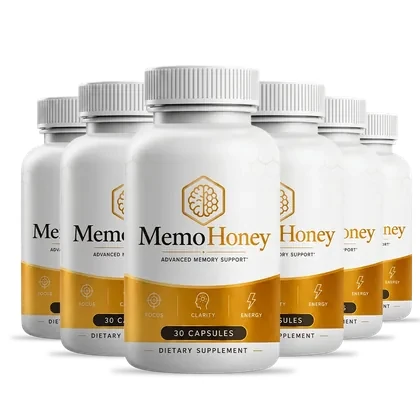
- The bottle and its artwork. The front label, the ingredient graphic and the printed direction: one capsule a day with water, in the morning before a meal. If the bottle in your hand ever differs from a page here, believe the bottle and tell us.
- The seller’s own terms. Pack prices of $158, $207 and $294, the 60-day guarantee, the 30 days of use the seller asks for before a claim, the New York returns address and the refund timing.
- U.S. health agencies. The NIH Office of Dietary Supplements for niacin and for supplements in general, MedlinePlus and the National Institute on Aging for memory, and the FDA and FTC for what a supplement label and its advertising may claim.
- Published research. Trials of single ingredients such as citrulline, arginine and beta-alanine, pulled from PubMed with the dose, the population and the outcome attached. None of them tested MemoHoney itself, and the pages that cite them say so.
Marketplace listings, look-alike “official” sites and press releases paid for by a brand sit below all four. They can suggest where to look; they are never quoted as fact.
Five stages every MemoHoney page passes through
- Transcribe. The writer copies, word for word, the lines of the artwork the page relies on: the claim, the six names and the direction.
- Price and terms. Anything about money is copied from the seller’s page on a stated date and checked again before a page is revised.
- Research. Each ingredient the page discusses gets a government source or a PubMed record, linked where it is used, with the amount the study actually gave its volunteers.
- Medical review. Dr. Sheila Mary, ND, MD, MPH reads the draft for accuracy and safety, paying closest attention to doses, interactions and anything that touches memory loss or a medical condition.
- Publish with a date. The page goes live with the reviewer in the byline and a revision date beside it. That date moves only when the content changes.
When a price, a label line or a safety source changes, the affected pages go back through the stages for the part that changed.
What the MemoHoney medical review covers, and its limits
The review covers the product copy, the label notes, the ingredient and safety sections, the FAQ answers and each journal post. It asks three questions of every page: does it match the artwork and the cited source, is any safety note missing or too faint, and does any sentence promise more than the label allows.
A review is not three other things. It is not the reviewer’s recommendation of MemoHoney. It is not a promise that the capsule will help your memory. And it is not advice about your own health, which belongs with a clinician who knows your history and the medicines you take.
MemoHoney claims these pages repeat, and claims they leave out
The front of the bottle says Advanced Memory Support, and its gold band names focus, clarity and energy. The seller’s page talks about memory function, mental clarity and focus. Those are the benefits this site describes, always as things the capsule is made to support.
- No page calls MemoHoney a treatment or cure for memory loss, dementia, Alzheimer’s disease or any other condition.
- No page says MemoHoney has been tested in a clinical trial, because no trial of the finished capsule has been published.
- No page sets a milligram figure beside an ingredient as the label’s own unless a source this site can show prints it.
- No page calls the FDA-registered facility emblem an FDA approval; the FDA does not approve supplements before they are sold, as its questions and answers on dietary supplements explain.
- No page promises a result by a set date. The timeline page reports the distributor’s figures as the distributor’s.
These limits follow the FTC guidance for health products, which expects health claims to rest on competent and reliable scientific evidence.
Memory topics where MemoHoney pages take extra care
A memory supplement sits close to real medical questions, so a few rules apply on every page that touches use, dose or safety.
- Changes in memory. Forgetfulness that is new, getting worse or noticed by other people is sent to a doctor first, with MedlinePlus and the National Institute on Aging as sources.
- Emergencies. Sudden confusion, slurred speech, a drooping face or weakness on one side are stroke signs, and the safety sections say to call 911.
- Blood vessels. Arginine and citrulline act on the pathway that relaxes blood vessels, so readers on blood-pressure medicine, a nitrate or a blood thinner are asked to check with their prescriber.
- Niacin. The adult upper limit for niacin from supplements is 35 mg a day, so pages remind readers to add up the niacin in every product they take, per the NIH niacin fact sheet.
- Age and pregnancy. The label is for adults 18 and over, and pregnant or nursing readers are asked to speak to their doctor first.
How the MemoHoney numbers on this site are worked out
Some figures on these pages are arithmetic rather than quotation, and each is labelled that way. Cost per day divides the pack price by the number of capsules: $158 for 60 capsules is about $2.63 a day, $207 for 90 is $2.30, and $294 for 180 is about $1.63.
The research column beside each ingredient prints what the cited trial gave its volunteers, with who they were and how long it ran. It is never a guess at what one MemoHoney capsule contains. Where the artwork supplied to this counter shows no figure, the page says so and leaves the space empty rather than filling it with an estimate.
How Memohoneya is paid when you order MemoHoney
Memohoneya earns a commission when you order through the buttons on this site. Those links carry a sponsored tag and open the seller’s own checkout, where you pay the listed price: $79 a bottle on two, $69 on three and $49 on six, with free U.S. shipping from three bottles up.
The commission is the reason this page exists in public. With the method written down, you can judge whether the pages lean toward the sale: the cautions, the trade-offs and the lower-rated buyer reports appear whether or not they help an order.
How the seller’s MemoHoney ratings are shown
The 4.8 score, the 1,130 written reviews, the 9,789 orders and the 87% who say they would recommend it all come from the distributor. This counter did not collect them and cannot check them against real orders, so every page that shows them labels them as the distributor’s figures, and the lower-rated reports sit alongside the five-star ones.
The editorial marks on the home page are a different thing: the desk’s own judgement, given row by row with the reason beside each, and labelled as the desk’s view rather than a customer rating.
What the MemoHoney pages will not do for you
- They will not tell you whether MemoHoney is right for you. Only a clinician who knows you can weigh that.
- They will not suggest stopping, starting or changing a prescription, or taking more than one capsule a day.
- They will not take an order by phone or email. Orders go through the order buttons only; the order desk listed in the footer handles tracking, changes and refunds afterwards.
- They will not quote a buyer, a doctor or a study that the team has not been able to trace to its source.
MemoHoney revision dates and the corrections route
Each page shows a revision date under its title and in the editorial record at the bottom, and the same date sits in the page’s structured data. It changes only when the content does: a new price, a corrected figure, a new safety source.
If something here looks wrong, use the contact page or the website inbox in the footer, and include the page address and the sentence in question. A link to your source helps. The team checks the point against the artwork or the cited source, corrects the page where the error sits and moves the date. A change to a dose, a price, a direction or a safety note is reviewed again before it goes live.
Orders, parcels and refunds are handled by the seller’s order desk, not by the website inbox; the refund policy sets out the steps.
Questions about the MemoHoney review standards
Does the medical review mean the doctor endorses MemoHoney?
No. The review checks that a page is accurate and that its safety notes hold up for a general reader. It is not an endorsement of the capsule and not advice about your own health.
Does Memohoneya make MemoHoney?
No. Memohoneya is a stocked U.S. counter that sells MemoHoney and writes these pages. The formula and the label belong to the brand and its distributor.
Where do the 4.8 score and the review count come from?
From the distributor, along with the order count and the buyer quotes. The site labels them as the distributor's figures because it cannot verify them.
How quickly is a reported mistake corrected?
The team checks the point against the artwork or the source as soon as it is read. If the page is wrong, it is fixed where the error sits and the revision date moves; dose, price and safety changes are reviewed again first.
Does the commission change what the pages say?
It should not, and this page is how you can check. The cautions and trade-offs appear whether or not they help an order, and the same method applies to every page.
Why are some MemoHoney label amounts left blank?
Because the artwork supplied to this counter shows the six names without figures. The pages print the amounts the cited trials used, labelled as trial amounts, and leave the label column empty rather than guess.