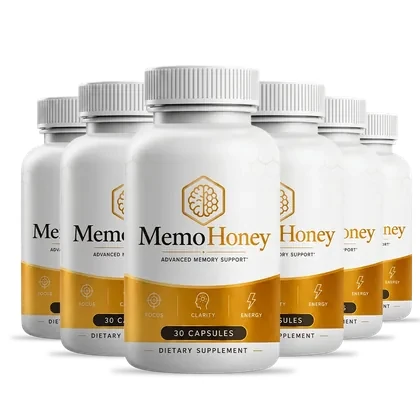
MemoHoney Official Website › Testing & Quality
Testing & QualityMemoHoney Testing and Quality: reading the ten emblems
The pack ships ten emblems: made in the USA, GMP, FDA-registered facility, non-GMO, natural ingredients, money-back, clinician formulated, no gluten, milk free and vegetarian. Six are statements about a factory or a formulation, three are marketing terms with no fixed definition, and one names a person the pack does not identify.
Each emblem, what it is a statement about, and what it does not cover.
The ten emblems on the MemoHoney pack
 Made in the USAWhere the bottle was filled, not where the amino acids were made.
 GMPGood Manufacturing Practice: a statement about the facility's procedures.
 FDA RegisteredA registration, not an approval. The FDA does not approve supplements.
 Non-GMOA sourcing claim about the inputs to the formula.
 Natural IngredientsA marketing term with no fixed legal definition for supplements.
 Money-BackA purchase policy from the seller. Not a medical promise.
 Clinician FormulatedAn unnamed clinician. The pack identifies nobody, and nor can this desk.
 No GlutenA formulation claim. Coeliac readers should ask for the tested figure.
 Milk FreeA formulation claim about dairy allergens.
 VegetarianThe only statement either way about the capsule shell material.
Ten emblems is a lot of graphics for one bottle, and the density is itself worth noticing. Emblems are cheap to print and they are doing the work a Supplement Facts panel would otherwise do: filling the space where a buyer looks for reassurance. Six of these ten are real statements about something checkable. Three are language. One names a person who is not named.
What GMP and FDA registration mean for MemoHoney
| Emblem | What it covers | What it does not cover |
|---|---|---|
| GMP | How the facility documents, cleans, trains and records. Audited by whoever issued the certificate | The contents of your bottle. A GMP facility can correctly and consistently make something with very little in it |
| FDA Registered Facility | That the facility is on the FDA's register, which every food facility shipping in the United States must be | Approval of any kind. The FDA does not approve dietary supplements, and registration is not an endorsement |
| Made in the USA | Where the filling and packing happened | Where the raw amino acids were synthesised, which for commodity amino acids is frequently elsewhere |
None of the three is a claim about what is in the capsule. That is what a certificate of analysis is for, and it is not supplied with an order.
That is the whole of it, and it is not a scandal. These three emblems appear on the great majority of supplement packaging sold in the United States and they mean the same thing on all of them. The mistake is reading them as quality verification of the contents rather than as a description of the building.
For the contents there is one document that matters and it is a certificate of analysis from a named laboratory. The batch verification page has the wording to request one.
The MemoHoney emblem this desk would drop
Clinician formulated is the one to take issue with, and the objection is narrow. It is not that the claim is implausible — plenty of supplements are put together with professional input, and there is nothing improbable about this one. It is that the emblem is unfalsifiable as printed. No name, no profession, no registration number, no statement of what the clinician did.
The fix costs nothing. Formulated with [name], [profession] turns a graphic into a checkable fact, and a reader can look the person up in ninety seconds. As it stands, the emblem asks for trust and offers nothing to place it in, which is the opposite of what a trust mark is for.
The same logic applies, more gently, to natural ingredients. The term has no fixed legal meaning for supplements, and on a formula of synthesised amino acids and a B vitamin it is doing very little work. Nobody is being deceived, and nobody is being told anything either.
The three allergen emblems on the MemoHoney pack
No gluten, milk free and vegetarian are formulation claims, which is to say they are statements the manufacturer makes about what went into the product rather than results from a test of what came out.
For most readers that is enough. A person avoiding dairy by preference is well served by a milk-free claim on a bottle of amino acids, which would be an odd place for dairy to appear in the first place. For somebody with coeliac disease or a diagnosed allergy the bar is higher, and the right move is to ask the seller for the tested figure in writing rather than to rely on a graphic.
The vegetarian emblem carries more weight here than the other two, because it is the only statement anywhere on the pack about what the capsule shell is made from. A shell is either plant-derived cellulose or animal-derived gelatin, the difference matters to a large number of buyers, and the artwork names neither. Taking the emblem at face value means the shell is not gelatin. It would take one line of text on the bottle to say so outright.
What can be established about a bottle of MemoHoney from the outside
Amino acids are, in one respect, an easier case than botanicals. Citrulline is a single defined molecule; beta-alanine is a single defined molecule. There is no question of which species was harvested, which plant part was used or how the extract was standardised — the questions that make botanical supplements genuinely hard to verify, and that decide whether an ingredient matches the one in its trials.
What remains is quantity and purity. Purity is a laboratory question with a standard answer format, and a certificate of analysis would settle it. Quantity is the question this whole website keeps arriving at, and the artwork does not answer it.
So the honest summary is that this is a formula which would be straightforward to verify if anybody published the documents, and that the documents are not published. That is a better position than a proprietary botanical blend, and a worse one than a product with a panel on the box.
The ingredient-quality question MemoHoney shares with the whole category
Two things can go wrong with a supplement ingredient and only one of them gets discussed. The first is that there is less in the capsule than the buyer expects, which is the subject of most of this website. The second is that there is something in it that should not be there, and that is a smaller risk with a far worse tail.
The published example worth knowing is a 2022 analysis that found the unapproved drug centrophenoxine in dietary supplements sold for cognitive enhancement. Products whose ingredient lists read like pharmacology — unfamiliar molecules, racetams, anything that sounds like a medicine — are the ones where this risk lives.
By that standard six amino acids and a B vitamin is a reassuring ingredient list. Every name on it is a commodity compound with a long history of use, none of them is a pharmaceutical analogue, and none is the sort of thing an adulterator reaches for. It is the most straightforwardly positive thing this page has to say about the formula, and it is worth saying after several sections of criticism.
The related variation problem is real and unglamorous: a survey of over-the-counter niacin preparations found the free nicotinic acid content varied widely between products sold for the same purpose. Form matters, and this artwork names no form.
Sources behind this MemoHoney quality page
- Questions and Answers on Dietary Supplements. U.S. Food and Drug Administration. https://www.fda.gov/food/information-consumers-using-dietary-supplements/questions-and-answers-dietary-supplements
- Using Dietary Supplements Wisely. National Center for Complementary and Integrative Health, National Institutes of Health. https://www.nccih.nih.gov/health/using-dietary-supplements-wisely
- Cohen PA, Avula B, Khan I. The unapproved drug centrophenoxine (meclofenoxate) in cognitive enhancement dietary supplements. Clin Toxicol (Phila). 2022;60(10):1156-1158. PMID 35959800. https://pubmed.ncbi.nlm.nih.gov/35959800/
- Niacin: Fact Sheet for Health Professionals. Office of Dietary Supplements, National Institutes of Health. https://ods.od.nih.gov/factsheets/Niacin-HealthProfessional/
- Meyers CD, Carr MC, Park S, et al. Varying cost and free nicotinic acid content in over-the-counter niacin preparations for dyslipidemia. Ann Intern Med. 2003;139(12):996-1002. PMID 14678919. https://pubmed.ncbi.nlm.nih.gov/14678919/
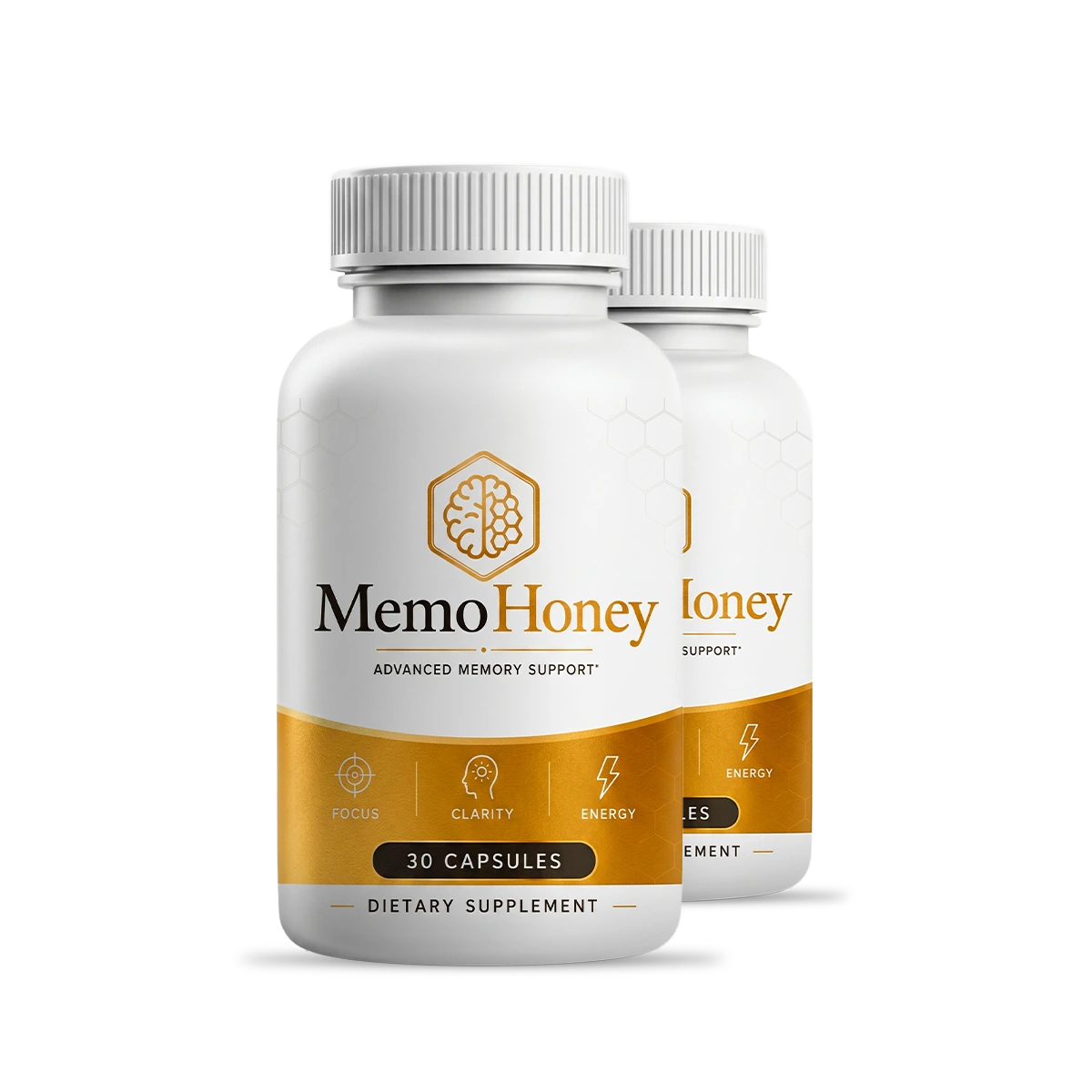
Order MemoHoney with the emblems read for what they are
Six statements about a factory, three marketing terms and one unnamed clinician. The refund window is the part with a number attached.
Two bottles $158 · six bottles $294 · 60-day money-back guarantee
Order MemoHoney From This CounterLot MEM-26/ME-7435 · one a day, 30 to a bottle · ships from the United States