MemoHoney Official Website › Articles › Evidence
EvidenceWhat actually helps memory in the evidence
Four things have randomised evidence behind them for cognitive outcomes in older adults: treating hearing loss, treating blood pressure, sleeping properly and a daily multivitamin. Three of the four are not sold in bottles, and the fourth is the cheapest product in the category.
Hearing
The strongest recent result in this area is not about a supplement. The ACHIEVE trial randomised 977 adults aged 70 to 84 with untreated hearing loss to a hearing intervention or a health education control and followed them for three years, measuring cognitive decline.
Untreated hearing loss is common, it is under-treated, and it is one of the few risk factors in this whole area that somebody can act on in an afternoon. A hearing test is free or cheap almost everywhere, takes twenty minutes, and is something a reader over sixty-five is likely to be overdue for.
No supplement counter is going to sell anything by writing that paragraph, which is precisely why it belongs near the top of this article.
MemoHoney is a dietary supplement and not a treatment. Nothing here is medical advice. Memory that has changed in a way you or the people around you have noticed deserves an assessment rather than a purchase, and MedlinePlus sets out what is worth reporting.
Blood pressure
SPRINT MIND randomised 9,361 adults with hypertension to intensive or standard blood pressure control and reported on probable dementia and mild cognitive impairment. It is one of the largest trials ever run with a cognitive endpoint, and it tested something every reader's doctor already measures.
There is a connection to this product worth naming, and it cuts the product's way. Citrulline lowers blood pressure: a 2025 meta-analysis found the effect in middle-aged and older adults, and found citrulline with arginine better than either alone. This label carries both.
The gap between those two facts is enormous. One used medicines to a target under supervision; the other used grams of an amino acid and measured millimetres of mercury. But the direction is the same, and it is the most defensible thing on this bottle — which is why the benefits page ranks the seller's fourth claim above the other four.
Sleep
Sleep is not associated with memory; it is part of how memory works. A 2026 review of memory consolidation sets out the neural and cognitive mechanisms, and the short version is that the reorganisation of the day's material into durable storage happens during sleep.
For a reader deciding what to change, that makes sleep the highest-leverage item on this list and the one most people are already failing. It is also free, available tonight, and does not require anybody's permission.
There is a small irony here worth reporting. One of the five digital guides bundled with the larger MemoHoney packs is about sleep. If it is any good, it may do more for the outcome a buyer is paying for than the capsules it arrives with.
The two supplement results that exist
It would be dishonest to write this article as though nothing in a bottle had ever worked. Two results are worth knowing and both belong to the same unglamorous product.
A randomised, placebo-controlled trial found that daily multivitamin supplementation improved memory in older adults. COSMOS-Mind reported on cocoa extract and a multivitamin against cognitive outcomes in a large older cohort.
A daily multivitamin costs a few dollars a month, prints every ingredient with a percent Daily Value, and is available in any supermarket. It is the cheapest thing in this entire category and it has the best randomised evidence in it. That is an awkward sentence for a page on a supplement counter and it is the one the evidence supports.
And the one that did not
The Ginkgo Evaluation of Memory study randomised 3,069 adults aged 75 and over to 120 mg of ginkgo biloba twice a day or placebo and followed them for a median of over six years. It found no reduction in the overall incidence of dementia or Alzheimer's disease, in people with normal cognition or with mild cognitive impairment.
Ginkgo was the category's flagship: plausible, standardised, traditional, supported by small positive trials. It was tested properly and it did not deliver. Any reader weighing a supplement should hold that result in mind, because it is what a fair test of a popular ingredient looks like and most ingredients have never had one.
Where MemoHoney sits, honestly
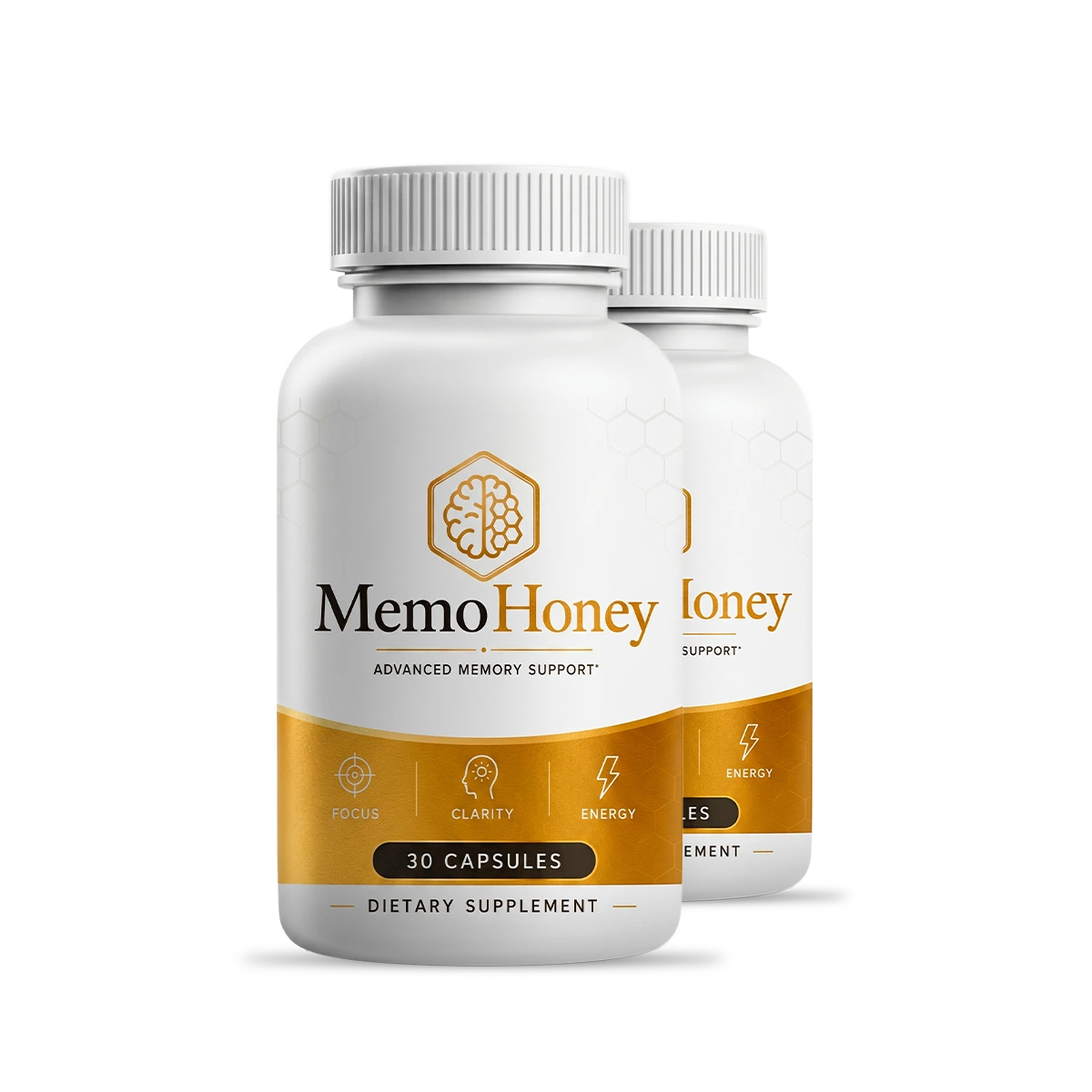
A once-daily capsule of six named ingredients with no printed amounts, sold on a sixty-day window. Worth trying as a habit after the free things, and not instead of them.
Two bottles $158 · six bottles $294 · 60-day money-back guarantee
Order MemoHoney From This CounterLot MEM-26/ME-7435 · one a day, 30 to a bottle · ships from the United States
Two things that are not on this list
Brain-training games are not here. They reliably improve performance at the games themselves, and the transfer to anything outside them has been the argument in that field for two decades. Playing one because you enjoy it is fine; buying one as an intervention is a different claim.
Nor is any single food. Individual foods and nutrients turn up constantly in observational work — the Chicago cohort is one of the better examples of the genre — and almost never survive a randomised test in the form the headline promised. The one supplement result in this article that did survive belongs to a multivitamin rather than to any particular nutrient in it.
The four, side by side
| Intervention | What was randomised | Who it applies to | What it costs |
|---|---|---|---|
| Hearing treatment | 977 adults aged 70 to 84 with untreated hearing loss, three years | Anybody with hearing loss they have not had treated | A hearing test, then whatever the treatment costs where you live |
| Blood pressure control | 9,361 adults with hypertension, intensive versus standard | Anybody with raised blood pressure | An appointment, and whatever your existing care covers |
| Sleep | Decades of mechanistic and interventional work | Everybody | Nothing |
| A daily multivitamin | Randomised, placebo-controlled, memory outcomes in older adults | Older adults | A few dollars a month, with every amount printed on the box |
Four interventions, three of which cannot be bought in a supplement aisle and one of which is the cheapest thing in it.
Reading that table beside a $79 bottle is uncomfortable and it is the point. None of the four is exciting, none of them is new, and all four have more behind them than any product sold for memory including this one.
What the table does not say is that a supplement is pointless. It says that a supplement is the sixth thing to do, not the first, and that a reader who does the first five and then adds a capsule is in a much better position than a reader who does the reverse.
Exercise, and why it is on every version of this list
Physical activity turns up in every set of recommendations about cognitive ageing, and the reason is that it plausibly acts through several of the other items at once: blood pressure, sleep quality, vascular health and mood.
It also connects, awkwardly, to this product's own ingredient list. The one citrulline malate trial in this age group, a pilot in women aged 60 to 75, gave 3 g a day alongside a six-week exercise programme of three sessions a week. The exercise was not the control; it was part of the intervention. Whatever that trial showed, it did not show it for a capsule taken by somebody sitting still.
The honest framing for any supplement in this category is therefore the same. These ingredients were studied in people who were moving, and the people they were studied in are the population a reader would have to resemble for the result to transfer.
The order to do them in
- Get a hearing test if you are over sixty-five or have ever been told to.
- Have your blood pressure measured and treated to whatever target your doctor sets.
- Fix your sleep, which is the largest lever and the one nobody sells.
- Move about. Every version of this list has exercise on it and this one is no exception.
- Consider a multivitamin, which is cheap, printed and has one positive randomised memory result.
- Then, if you want to, try something else — and treat it as an experiment rather than an answer.
Nothing on that list is exciting and every item on it has more behind it than any capsule sold for memory, including the one on this website. A counter that did not say so would be leaving out the most useful thing it knows.
What a supplement can reasonably be is the sixth item: a low-stakes experiment with a stated refund window, run properly for sixty days, by somebody who has already done the first five. That is a modest claim, it is the claim this desk is willing to make, and the who it's for page says the same thing in a shorter form.
Memory that has changed in a way you or the people around you have noticed is a clinical question, not a shopping one. MedlinePlus sets out what is worth reporting, and an assessment does not stop anybody trying a supplement afterwards.
- 2023: Hearing intervention versus health education control to reduce cognitive decline in older adults with hearing loss in the USA (ACHIEVE): a multicentre, randomised controlled trial — Lin FR and co-authors (Lancet 2023;402(10404):786-797), PubMed record 37478886
- 2019: Effect of Intensive vs Standard Blood Pressure Control on Probable Dementia: A Randomized Clinical Trial — Williamson JD and co-authors (JAMA 2019;321(6):553-561), PubMed record 30688979
- 2026: Sleep and memory consolidation: Neural and cognitive perspectives — Yasser E and co-authors (Prog Brain Res 2026;299:137-176), PubMed record 42547206
- 2023: Multivitamin Supplementation Improves Memory in Older Adults: A Randomized Clinical Trial — Yeung LK and co-authors (Am J Clin Nutr 2023;118(1):273-282), PubMed record 37244291
- 2023: Effects of cocoa extract and a multivitamin on cognitive function: A randomized clinical trial — Baker LD and co-authors (Alzheimers Dement 2023;19(4):1308-1319), PubMed record 36102337
- 2008: Ginkgo biloba for prevention of dementia: a randomized controlled trial — DeKosky ST and co-authors (JAMA 2008;300(19):2253-62), PubMed record 19017911
- 2025: Does l-citrulline supplementation and watermelon intake reduce blood pressure in middle-aged and older adults? A systematic review and meta-analysis of randomized controlled trials — Luo P and co-authors (Clin Nutr ESPEN 2025;69:653-664), PubMed record 40789388
- 2026: Short-term citrulline malate supplementation enhances lower-limb function in physically active older women: A pilot randomized controlled trial — Ramos-Hernández R and co-authors (Clin Nutr ESPEN 2026;74:103356), PubMed record 42162613
- 2004: Dietary niacin and the risk of incident Alzheimer's disease and of cognitive decline — Morris MC and co-authors (J Neurol Neurosurg Psychiatry 2004;75(8):1093-9), PubMed record 15258207
- Memory — published by MedlinePlus, U.S. National Library of Medicine, read on the publisher’s own site (medlineplus.gov)