MemoHoney Official Website › Articles › Bottle count and timing
Bottle count and timingWhen a 30-Capsule Bottle Meets a 60-Day Calendar
Thirty capsules tell a buyer how long one bottle lasts. The count does not disclose an ingredient dose or predict a result.
Thirty capsules describe a routine first
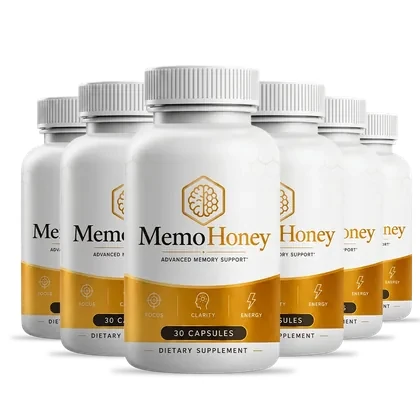
The most concrete number on this MemoHoney bottle is 30 capsules. Coupled with the printed direction of one capsule daily, it describes a thirty-day routine. That is useful buying information: it tells a buyer how long one bottle lasts. It does not tell a buyer how many milligrams of any ingredient are in a capsule, because the supplied artwork names six ingredients but prints no Supplement Facts panel or amount.
That distinction matters because a count and a dose answer different questions. Capsule count is a calendar measurement. A dose is an amount of a particular ingredient. The product record supports the first statement directly. It does not support guessing the second from the bottle size, the number of ingredients, or the way the label is designed.
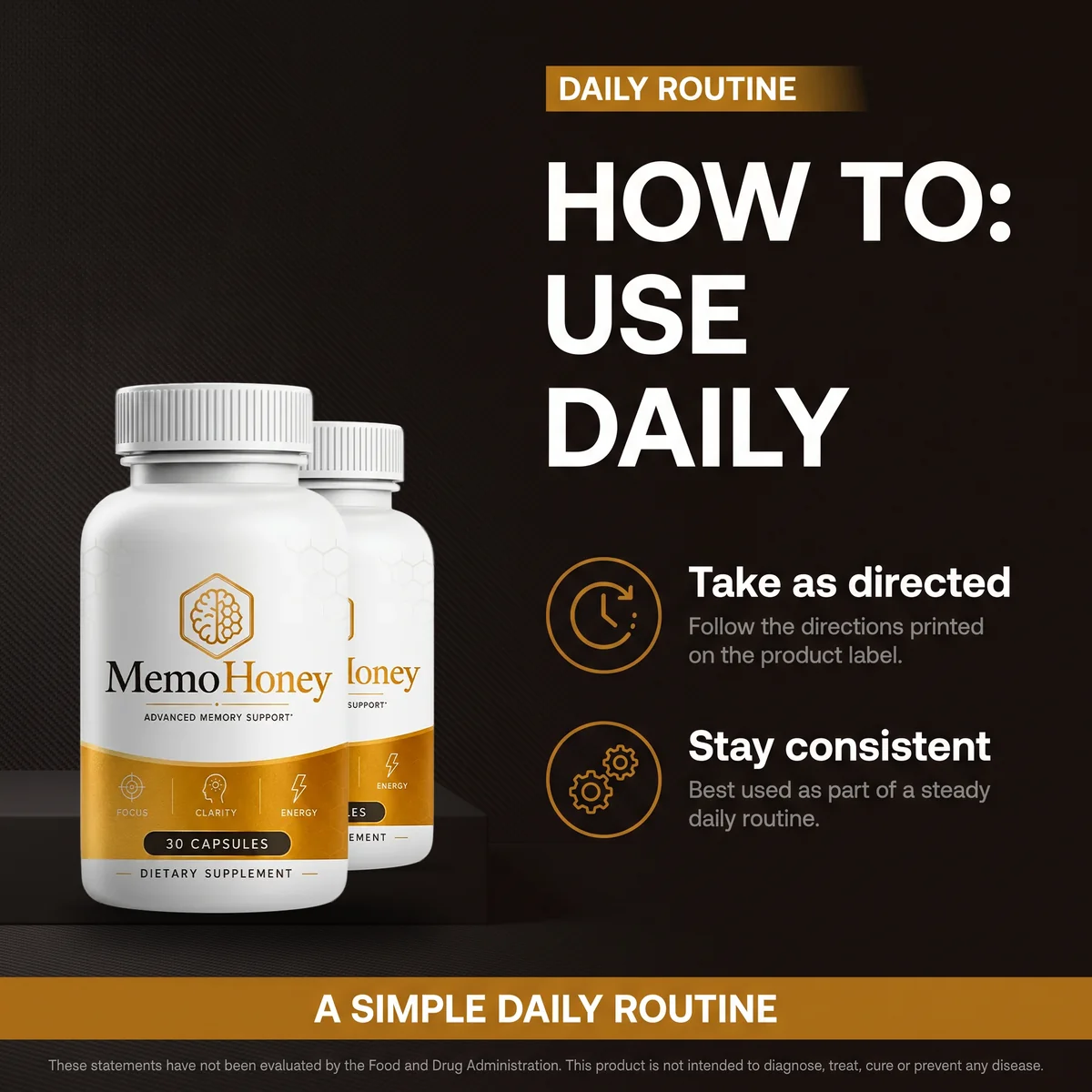
The routine is still worth stating plainly. One capsule before a meal in the morning is the seller's direction. A buyer can decide whether that is a habit they will genuinely keep. But a daily habit should not be turned into evidence that the mixed formula matches the ingredient-specific quantities used in published research.
| Record | What it can establish | What it cannot establish alone |
|---|---|---|
| 30-capsule bottle | A 30-day routine at one daily | A milligram amount or research-equivalent dose |
| 60-day guarantee | The stated purchase-date service window | A promised outcome or a delivery-date clock |
| Two-bottle pack | 60 capsules / 60 days at the stated routine | Whether the product is right for an individual |
| Review timing summary | What the seller's review set reports | A clinical timeline or guaranteed experience |
The count, pack duration and return window can be compared directly. The missing ingredient amounts cannot be safely inferred from them.
The bottle, the guarantee and the pack are three calendars
A single bottle runs for 30 days. The stated money-back window is 60 days from purchase, and the seller asks for 30 days of use before considering a claim. Those are three related pieces of timing, not three versions of the same promise. A buyer should write them as dates rather than relying on a general impression that a guarantee is long or short.
The entry pack contains two bottles, so it lasts 60 days when followed as directed. That makes it the same length as the stated window. A three-bottle pack reaches 90 days and a six-bottle pack reaches 180 days. More bottles may lower the per-bottle price, but they also extend beyond the period in which the seller says a purchase can be returned.
No part of that arithmetic predicts a memory result. It is transaction planning. The seller's review summary reports a four-to-eight-week wait, while the guarantee starts at payment rather than delivery. A buyer can use that information to decide what amount of time and money they are comfortable committing before a purchase.
A bottle count does not close the research gap
The supplied ingredient list names L-Arginine, L-Arginine AKG 2:1 Extract, L-Citrulline HCL, L-Citrulline Malate, Niacin and Beta-Alanine. Published work on those individual substances used specific quantities and particular participant groups. Much of the research belongs to exercise, blood-flow or sports-nutrition questions rather than a MemoHoney trial or a study of the six-ingredient mixture.
A 30-capsule bottle cannot tell a reader whether one capsule contains the quantity a study used. It cannot turn an athlete study into a memory result for a general buyer, either. The absence of an amount panel is therefore not a cosmetic issue: it leaves the central comparison between the product and the research unsupported by the supplied pack.
Niacin is the exception in one limited sense. Its relevant amounts are commonly discussed in milligrams, while the other named compounds appear in gram-scale studies. That does not supply the missing niacin amount in this product. It simply explains why ingredient names alone are insufficient for anyone trying to compare the formula with the research record.
The purchase date matters before the first capsule
A guarantee counted from purchase starts before delivery and before the first morning dose. The confirmation email is therefore part of the practical product record. Save it when the order is placed, note the end of the stated 60 days, and read the seller's current return instruction before a parcel is prepared if a service issue arises.
The extra condition of 30 days of use should also be read as a service term rather than as an effectiveness claim. It tells the buyer how the seller says it will handle a request. It does not establish that a benefit must appear after a month, and it should not stop a buyer from seeking appropriate advice if a reaction or health concern occurs.
Separating those points makes the calendar less confusing. The date of payment starts one record. The routine starts another. A later return shipment and card-processing period are further events. Keeping them apart prevents an ordinary delay in shipping or banking from being mistaken for a change in either the product or the stated guarantee.
The smallest pack is the clearest first comparison
The two-bottle pack is not a recommendation for everyone. It is the cleanest way to see the relationship between the product's stated 60-day window and the amount of product in the order. Two 30-capsule bottles cover exactly those 60 days when used according to the printed direction. That is a concrete comparison a buyer can make without promising any outcome.
The larger packs exchange a lower per-bottle figure, free-shipping terms and seller-described digital bonuses for more time outside the stated window. A buyer who already knows the product may evaluate that trade differently from a buyer who has not yet tried it. The relevant fact is the number of days purchased, not a label such as most popular or best value.
The pricing page and guarantee page should be read together. A price comparison without the return calendar is incomplete, and a guarantee summary without the pack count hides how much product extends after the stated decision period.

A daily routine is not a substitute for care
It is reasonable to assess whether one capsule in the morning is a realistic routine. It is not reasonable to use a routine as a way to postpone assessment of a change in memory. Trouble with familiar tasks, a decline noted by family, or a worsening pattern deserves attention that is specific to the person rather than a generic supplement page.
The same caution applies to medicines. The product names compounds associated with nitric-oxide pathways as well as niacin and beta-alanine. A person taking prescription medicines, managing blood pressure or concerned about an interaction needs a pharmacist or prescriber to consider the complete label and their situation. The bottle count cannot answer that question.
The disciplined use of the calendar is modest: it helps a buyer keep an order record, compare pack durations and understand the stated service terms. It should remain separate from medical judgement, and it should remain separate from an inference that a fixed daily count has proven a fixed health effect.
Check the MemoHoney record before ordering
The bottle count, six named ingredients, purchase-date guarantee, and the questions the supplied record leaves open.
Two bottles $158 · six bottles $294 · 60-day money-back guarantee
Order MemoHoney From This CounterLot MEM-26/ME-7435 · one a day, 30 to a bottle · ships from the United States
The decision this record can support
A product image, a label, a seller page, a lot reference, an order email and a research paper are not interchangeable records. Each is useful within a boundary. The label can say what it prints. The seller page can state its terms. A lot reference can identify a production run. An order email can identify a purchase. A study can report the dose, people and outcome it actually examined. None should silently be promoted into a different kind of evidence.
That boundary makes an ordinary negative decision possible. If a missing quantity, testing document, dietary detail or service condition would decide the purchase, leaving the product unpurchased is a careful outcome. It does not require calling the product good or bad. It simply recognises that the supplied record has not settled the question the buyer needs answered before the clock begins.
After purchase, the same sorting keeps questions with the right people. Save the product and order records for a service issue. Take medicine interactions, reactions, worsening memory or a change noticed by others to a pharmacist or clinician. A return process is not a health assessment, and an order desk cannot provide individual clinical advice.
This is intentionally a modest standard. Read the literal claim, preserve the source that carries it, ask the next precise question, and let uncertainty remain uncertainty when no supporting record is supplied. That is more useful to a buyer than a stronger-sounding conclusion that the bottle, the receipt or the research does not actually justify.
MemoHoney is a dietary supplement and not a treatment. Nothing here is medical advice. Memory that has changed in a way you or the people around you have noticed deserves an assessment rather than a purchase, and MedlinePlus sets out what is worth reporting.
- Questions and Answers on Dietary Supplements. U.S. Food and Drug Administration. https://www.fda.gov/food/information-consumers-using-dietary-supplements/questions-and-answers-dietary-supplements
- Using Dietary Supplements Wisely. National Center for Complementary and Integrative Health, National Institutes of Health. https://www.nccih.nih.gov/health/using-dietary-supplements-wisely
- Memory. MedlinePlus, U.S. National Library of Medicine. https://medlineplus.gov/memory.html
- Dolan E, Swinton PA, Painelli VS, et al. A Systematic Risk Assessment and Meta-Analysis on the Use of Oral β-Alanine Supplementation. Adv Nutr. 2019;10(3):452-463. PMID 30980076. https://pubmed.ncbi.nlm.nih.gov/30980076/
- Khalaf D, Krüger M, Wehland M, et al. The Effects of Oral l-Arginine and l-Citrulline Supplementation on Blood Pressure. Nutrients. 2019;11(7):1679. PMID 31336573. https://pubmed.ncbi.nlm.nih.gov/31336573/