MemoHoney Reviews: An Honest Look at Whether It Works
Does MemoHoney really work?
There is no independent trial of the finished product, so nobody can honestly promise it works for you. What is verifiable is that MemoHoney has a fully disclosed label, that a few of its amounts are meaningful while others are only a trace, and that the realistic ceiling for this whole category is small. Judge it over a consistent 8–12 week trial, not a single week.
- No proprietary blend: every ingredient carries a printed number, which is more than many rivals offer.
- The evidence ceiling is modest: nothing on the shelf cures, treats or prevents a memory condition.
- Read testimonials skeptically and protect yourself with the money-back window before you buy.
What MemoHoney reviews can and cannot tell you
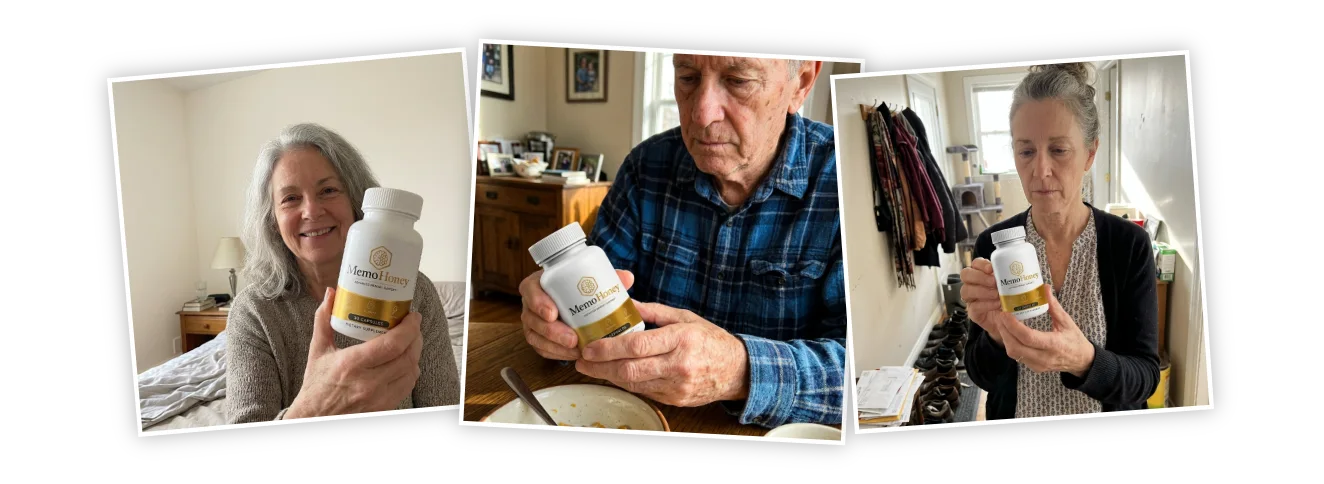
Most MemoHoney reviews you will find online fall into two useless piles: breathless praise from pages that earn a commission, and furious one-star anger from people who expected a miracle in a week. Neither tells you what you actually want to know, which is whether the amounts inside the bottle match the amounts that have been studied, and whether the claims are honest. That is the gap this review tries to fill. We are an affiliate too — disclosed on every page — so the only thing that makes a review worth reading is whether it is willing to say the unflattering parts out loud. This one is.
Start with the ceiling, because it frames everything. No dietary supplement cures, treats or prevents any disease, and memory supplements as a category tend to produce small effects at best, usually measured on attention and recall tests rather than on real-world outcomes. Anyone selling you a capsule as if it will reverse a memory problem has already lost the right to your trust. Once you accept that ceiling, the question stops being "is this the miracle?" and becomes the sensible one: "is this a fairly priced, honestly labelled, modest support worth testing?"
The answer to that narrower question is where MemoHoney actually does reasonably well, and also where it has real weaknesses. Both deserve airtime.
What is actually in MemoHoney
The single best thing about the MemoHoney formula is that you can see all of it. There is no proprietary blend hiding the amounts, which immediately puts it ahead of a surprising number of competitors. The panel is built on six named ingredients: L-arginine and L-arginine AKG, L-citrulline HCl and L-citrulline malate, beta-alanine and niacin. That is a blood-flow-and-cellular-energy idea rather than a classic herbal nootropic stack — there is no caffeine, no bacopa and no huperzine here.
Being able to see the numbers is exactly what lets you judge them, and the judgement is mixed. The niacin, at 47% of the Daily Value, sits comfortably in a meaningful range and feeds the NAD your cells use to turn food into usable energy. The arginine and citrulline totals are real and honestly disclosed, but they land below the gram-scale doses used in most published trials of those compounds. And the beta-alanine, at a few dozen milligrams against research protocols measured in grams, is a trace that should not be counted on for anything. If you want to run that check yourself on any bottle, our walkthrough on how to read a Supplement Facts panel like a buyer shows the exact method.
Comparing label doses to studied doses
This is the heart of an honest review, and almost no testimonial does it. A supplement can contain a genuine, well-studied ingredient and still contain too little of it to matter. The two facts sit side by side on the panel: the name, which sounds impressive, and the number, which tells the truth.
The right instinct is to look up the amount used in the research for each ingredient and compare. When MemoHoney's niacin lands near a meaningful fraction of the Daily Value, that is a point in its favour. When its arginine and citrulline totals fall short of the gram-scale doses in circulation studies, that is a point to note honestly. When the beta-alanine is a rounding error against studied protocols, that is a point against. A fair review is a ledger, not a verdict shouted in either direction, and the ledger here reads: transparently labelled, a couple of amounts that pull their weight, and several that are more gesture than dose.
A named ingredient is a promise; a printed number is the receipt. Judge a supplement by the receipts — and MemoHoney at least prints them.
See every amount for yourself
The full MemoHoney Supplement Facts panel is transcribed on our main page — each ingredient, each milligram, and a plain note on which amounts sit in a studied range and which are only a trace, alongside today's official-store pricing and the 60-day money-back guarantee.
Get OfferHow to read testimonials skeptically
Testimonials are the most persuasive and least reliable evidence in the whole supplement world. They feel like proof and they are almost never proof, for three structural reasons.

Survivorship. The people who post are disproportionately the ones for whom something happened — good or bad. The large, quiet middle who took it, felt nothing in particular and moved on never writes a word, so the visible reviews are a skewed sample, not a representative one.
Incentives. Many glowing write-ups sit on pages that earn a commission on the sale, including, in the interest of honesty, this site. That does not make every positive claim false, but it does mean praise is cheap and you should weight it accordingly and look for the specific over the ecstatic.
Confounding. The person who started a supplement in January often also started sleeping better, drinking less and walking more in January. When their focus improves, the capsule gets the credit it may not have earned. A single life rarely isolates one variable, which is exactly why controlled trials exist and anecdotes cannot substitute for them.
The practical filter: trust reviews that describe a specific, checkable process — "I took it daily for ten weeks and noticed a small difference in the afternoon slump" — far more than ones that describe a transformation. And discount any review, positive or negative, that treats a memory-support supplement as if it were medicine.
The placebo effect is real — and that is not an insult
When people hear "it is probably placebo," they hear "you imagined it." That is not what the word means. The placebo effect is a genuine, measurable phenomenon: expectation alone can shift how alert, focused or capable a person feels, which is precisely why serious trials compare a product against a dummy pill rather than against nothing. If a daily capsule and a small ritual make you feel more on top of things, some of that is real experience even if the molecules did little.
The reason this matters for reading MemoHoney reviews is simple: a wall of sincere five-star posts is fully compatible with an ingredient effect that is small. Both can be true at once. The people are not lying and the capsule is not a miracle. Holding those two ideas together is the whole skill of reading this category well.
Weighing positive and negative reviews together
A useful habit is to read the one-star reviews and the five-star reviews as a matched pair, because each corrects the other's blind spot. The angriest negative reviews are often people who expected a stimulant and felt nothing on day two, which is a mismatch of expectations rather than a product failure — a background formula was never going to deliver a jolt. Strip out that category and the remaining criticism tends to cluster on things worth taking seriously: price relative to the disclosed doses, an ingredient that is only a trace, or a slow, unremarkable result over a genuine trial.
The most glowing reviews deserve the same triage. Discount the ones that read like a sales page and keep the ones that describe a specific, boring process — a named number of weeks, a modest and plausible change, an honest note that they also improved their sleep at the same time. When a positive and a negative review both describe the same modest ceiling from opposite emotional directions, you have probably found the truth: a fairly labelled supplement with a small, real-world effect that will matter more to some people than others.
Notice what neither camp can settle. A pile of reviews, however sincere, is not a clinical trial; it cannot isolate the capsule from everything else changing in a person's life, and it cannot tell you whether an effect would survive a placebo comparison. Reviews are useful for spotting shipping problems, customer-service quality and obvious red flags — they are close to useless for proving that an ingredient at a given dose does what the label implies. Keep them in that lane and they will serve you well.
Setting a fair trial window: eight to twelve weeks
The most common way people misjudge a supplement like this is timing. MemoHoney is a background formula with no stimulant in it, so there is nothing to feel in the first hour and no honest verdict to reach in the first few days. The ingredients most likely to do anything work slowly, on the order of weeks.
So plan the trial before you buy. Give it a consistent eight to twelve weeks at the labelled dose, taken at the same time every day and anchored to something you already do without thinking — breakfast, brushing your teeth — because adherence is the single largest predictor of whether any daily supplement does anything at all. A capsule taken four days a week is not the product that was studied; it is a weaker one you assembled by accident. Keep the rest of your life roughly steady during the window so you are testing the capsule and not your new gym habit, and decide at the end with a cool head rather than on day four.
Is MemoHoney legit or a scam?
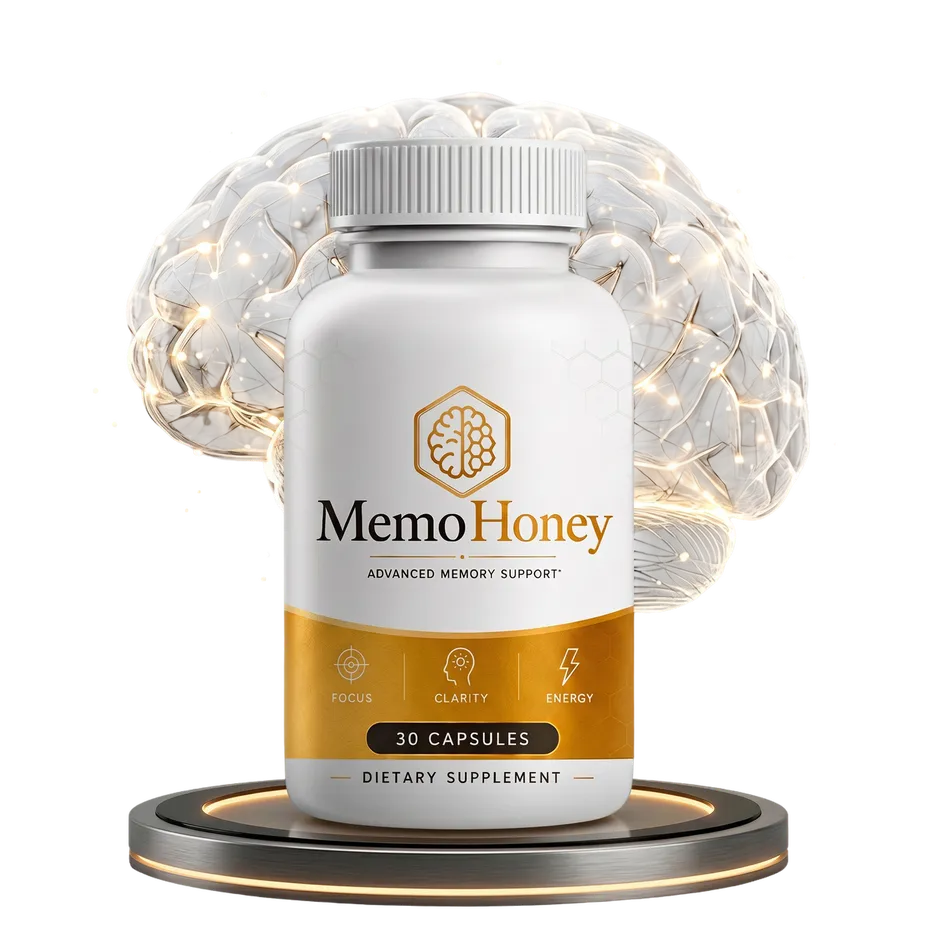
It is a fair question to ask of any supplement bought online, and the honest reading of MemoHoney is that it is a real, legitimately sold product rather than a phantom. There is an actual bottle, a fully printed Supplement Facts panel with no hidden blend, and an advertised money-back guarantee — none of which is how outright scams typically operate, because scams avoid disclosure and avoid refunds.
The genuine risks sit elsewhere, and they are worth naming plainly. The first is marketing hype: sales language that implies far more than any supplement can deliver, which is a reason for skepticism about the claims but not evidence of fraud. The second, and more concrete, is counterfeits — unofficial third-party listings selling fake or expired bottles under the same name. That is a distribution problem, not a formula problem, and the fix is to buy through the official store. Our guide to buying MemoHoney safely and avoiding counterfeits covers how to tell an official listing from a copycat.
Check the money-back window before you buy
The best consumer protection in this entire category is a clear refund policy, and it only helps you if you read it before you pay. The official store advertises a 60-day money-back guarantee, which happily covers the eight-to-twelve-week trial this review recommends — but "advertises" is not "assume." Before ordering, confirm on the checkout page itself: exactly how many days you have, whether opened bottles qualify, who pays return shipping, and the precise steps to request a refund.
A guarantee you have actually read turns the whole decision into a low-stakes experiment: you run a fair trial, and if the modest support does not justify the cost for you, you use the policy. That is a far more sensible frame than either the hype or the outrage, and it is the one a good review should leave you holding. If you want to place MemoHoney against its rivals on price and doses before deciding, our piece on how to compare the best brain supplements in 2026 lays out the method.
Run a fair trial, backed by the guarantee
Every MemoHoney amount is transcribed on our main page next to the current official-store pricing and the 60-day money-back terms — so you can start a proper 8-to-12-week trial knowing exactly what is in the bottle and how the refund window works.
Get OfferFrequently asked questions
Does MemoHoney actually work?
There is no independent clinical trial of the finished MemoHoney product, so the honest answer is that no one can promise it works for you. What we can say is that its label is fully disclosed, that some ingredients such as niacin sit in a meaningful range while others such as beta-alanine are only a trace, and that it is a non-stimulant daily formula judged over weeks. The realistic ceiling for this whole category is small, so treat it as a modest support to test, not a guaranteed result.
Is MemoHoney legit or a scam?
There is a real product with a fully printed Supplement Facts panel and a money-back guarantee, which is not how outright scams usually behave. The genuine risks are more mundane: over-hyped marketing that promises more than any supplement can deliver, and counterfeit bottles sold through unofficial third-party listings. Buy through the official store, read the label rather than the sales copy, and keep your expectations anchored to what the ingredients can plausibly do.
How long before MemoHoney shows results?
This is a background formula, not a stimulant, so there is nothing to feel in the first hour and no fair verdict to reach in the first week. The ingredients most likely to do anything work over weeks, so give it a consistent 8 to 12 week trial at the labelled dose before you decide. Take it at the same time every day, because a capsule taken four days a week is a weaker product you made yourself.
Is there a MemoHoney money-back guarantee?
The official store advertises a 60-day money-back guarantee, which comfortably covers a fair trial window. Before you buy, confirm the current terms on the checkout page itself: how many days you have, whether opened bottles qualify, who pays return shipping and how refunds are requested. A clear, honest guarantee is one of the better signals a memory supplement can offer, but only if you actually read it before ordering.
References
- NIH Office of Dietary Supplements — Dietary supplement fact sheets.
- National Center for Complementary and Integrative Health (NIH) — Dietary and Herbal Supplements.
- Federal Trade Commission — Health Products Compliance Guidance.
- U.S. Food & Drug Administration — Dietary Supplements overview.
- PubMed — published literature on the placebo effect and cognition.