Best Brain Supplements 2026: How to Compare Them Properly
How do you actually compare brain supplements?
Ignore star ratings and compare on five things: which ingredients are inside, whether each is dosed at the clinically studied amount, the form used, the strength of the evidence, and the cost per studied serving. The best brain supplements disclose every milligram so you can run that math yourself.
- Clinical dose beats ingredient count — twelve underdosed extracts lose to three at their researched amounts.
- Benchmarks to know: bacopa ~300 mg at 55% bacosides, citicoline ~250–500 mg, and a real DHA dose, not a sprinkle.
- Value is cost per studied dose, not the sticker price and not the number of stars a review site awarded.

Search for the best brain supplements — and about sixty-six hundred people do every month — and you'll be handed a wall of ranked lists, gold-medal badges and five-star verdicts. Almost none of it tells you what you actually need to know. This guide is different on purpose: instead of naming a winner, it hands you the framework the ranking sites don't want you to have, so you can judge any formula, including ours, on its own numbers. Do that once and you never need another “top 10” list again.
Why “best” is the wrong question to start with
There is no single best brain supplement, because there is no single buyer. A shift worker fighting afternoon fog, a student who wants to protect the sleep that consolidates study, and an older adult supporting everyday recall are three different problems, and the formula that suits one may be beside the point for another. “Best” only becomes a real question once you fix best for what, judged how. The rest of this article is about the “judged how,” because that part is universal even when the goal is not.
It also pays to know what “best” is not. It is not the loudest promise, the prettiest bottle, or the product with the most ingredients on the label. Ingredient count in particular is a trap: a formula that lists fifteen botanicals is often listing fifteen fractional amounts, none of them at a dose any study ever used. More names on the panel can mean less of each.
The five-point framework for the best brain supplements
Every meaningful comparison reduces to five questions. Run all five and the market sorts itself quickly.
1. Ingredient — is it something with real evidence? Start by asking whether each listed ingredient has published human research behind it at all. Some do (caffeine, bacopa, certain omega-3s); some are riding a trend with a handful of small studies; some are filler that sounds scientific and isn't.
2. Dose — is it the clinically studied amount? This is the single most decisive question, and the one marketing works hardest to obscure. An ingredient present at a small fraction of its researched dose is there for the label, not for you.
3. Form — can your body use it? Form matters for some ingredients: the salt, ester or standardisation can change how much active compound you actually absorb. A botanical standardised to its active fraction is not the same as raw powder, and the panel should say which you're getting.
4. Evidence strength — how solid is the research? A dozen consistent randomised trials is a different animal from one small open-label study. Weight your confidence to match.
5. Cost per studied serving — what does a working dose actually cost? Only after the first four does price become meaningful, and even then it's cost per effective serving, not per bottle.
Clinical dose versus pixie-dusting
If you learn one concept from this page, make it this one, because it explains most of the disappointment in the category. “Pixie-dusting” is the practice of including a trendy ingredient at a token amount — enough to print its name on the front of the box, nowhere near enough to do what the name implies. The label looks impressive. The dose is homeopathic in spirit.
The antidote is to carry a few benchmark doses in your head and check the panel against them. Bacopa monnieri is studied at roughly 300 mg per day standardised to about 55% bacosides — and the standardisation matters as much as the milligrams, because 300 mg of an unstandardised powder is not the same thing. Citicoline research clusters around 250 to 500 mg. Omega-3 formulas should carry a real DHA dose you can point to, not a rounding error hidden inside a “proprietary marine blend.” When a product lists bacopa but won't tell you the standardisation, or lists “omega-3 complex” without a DHA number, that silence is the answer. Our walkthrough on reading a Supplement Facts panel turns this into a repeatable, sixty-second check you can run in the shop.
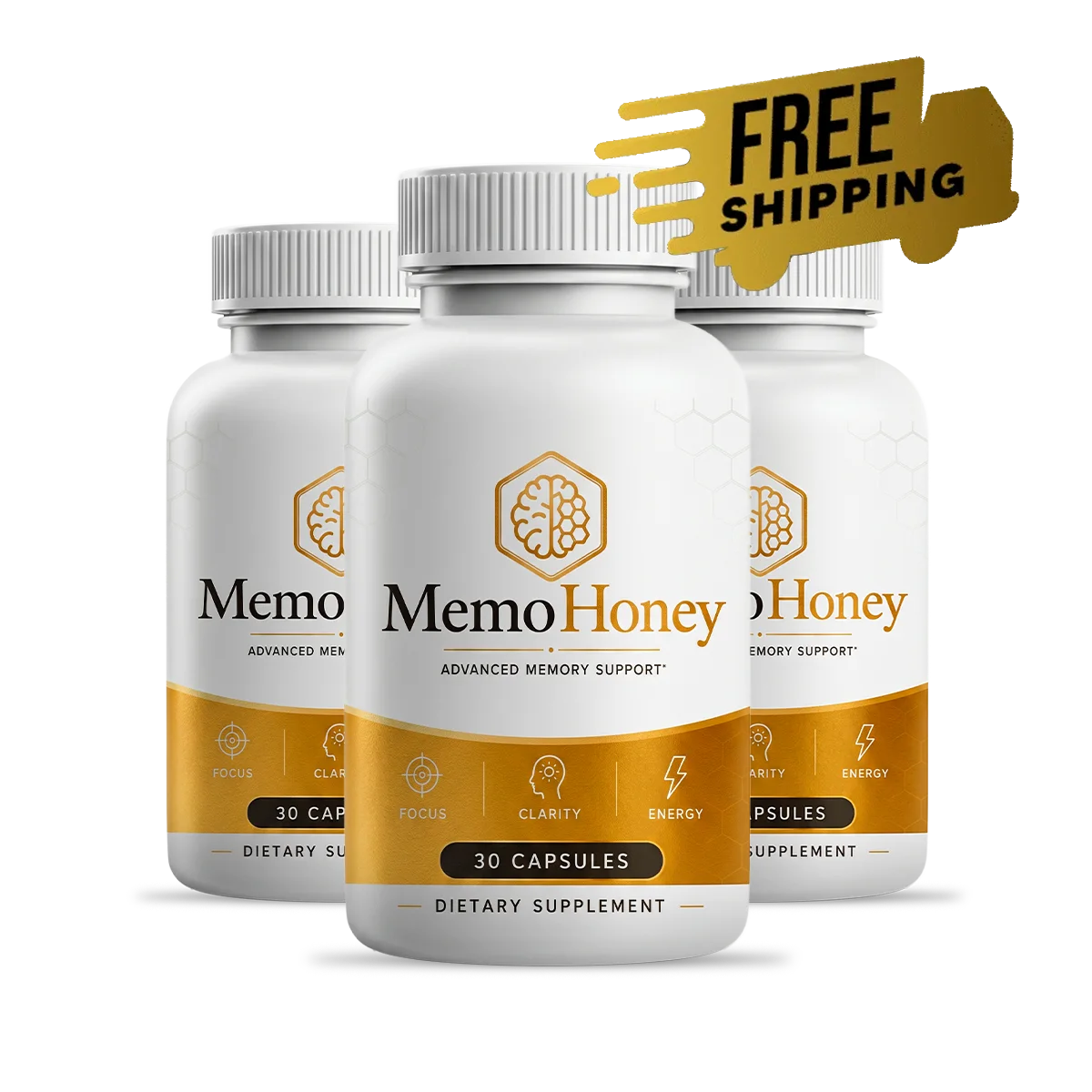
Compare a fully disclosed label
MemoHoney prints every ingredient and every milligram on the panel — no proprietary blend to run your framework against a black box. See the full transcription, which amounts sit in a studied range and which don't, current pricing and the 60-day guarantee on our main page.
Get OfferThe comparison table to keep in your head
Here is the framework applied to a handful of the ingredients you'll meet most often. The doses are the amounts commonly used in published research, not a recommendation for any individual, and the evidence column is our plain-language read of how consistent the research is, not a score.
| Ingredient | Amount typically studied | Acts over | Evidence strength |
|---|---|---|---|
| Caffeine | Roughly 1–3 mg per kg body weight | 30–60 minutes | Strong for alertness; tolerance builds |
| Bacopa monnieri | ~300 mg at 55% bacosides | 8–12 weeks | Modest but replicated for memory measures |
| Citicoline (CDP-choline) | ~250–500 mg daily | Weeks | Promising; fewer large trials |
| Omega-3 (DHA) | A meaningful DHA dose, often ~500 mg+ | Weeks to months | Strong for status; cognition effects context-dependent |
| L-theanine with caffeine | ~100 mg with ~50 mg | 30–60 minutes | Moderate for attention with a calmer feel |
| Proprietary “blend” hiding amounts | Undisclosed by design | Unknown | Unverifiable — treat as a red flag |
Read the last row twice. A proprietary blend that gives you one combined total instead of per-ingredient amounts makes every other column in this table impossible to check. That isn't a neutral choice; it's the packaging equivalent of covering the price tag.
How affiliate “best of” lists are really ranked
Now the uncomfortable part. Many of the “best brain supplements of 2026” lists you'll find are not ranked by evidence at all. They're ranked by commission. A site earns a different payout per sale from each brand, and — consciously or not — the product with the fattest affiliate deal tends to float to the number-one slot, dressed up in the language of rigorous testing. The “we tested 47 formulas” framing is often a stock photo of pill bottles and a spreadsheet nobody will ever show you.
We say this as a site that also earns affiliate commission, disclosed on every page — which is exactly why we're handing you the framework instead of a ranking. The defence against a rigged list isn't to find an honest list; it's to stop needing one. Once you can read a panel, check a dose against a benchmark, and divide price by studied servings, the ranking becomes something you produce, not something you're sold. That includes being skeptical of us: hold MemoHoney to the same five questions.
Price, and the number that actually matters
Sticker price is close to useless on its own. A $70 bottle with everything at its studied dose can be better value than a $25 bottle of fractional amounts, and a premium price can just as easily sit on top of pixie-dusting. The figure that cuts through it is cost per studied dose: take what a bottle costs, work out how many servings actually deliver a researched amount of the ingredients you care about, and divide. Compare that across products and the rankings often invert. We walk through the arithmetic, with worked examples, in our note on the cost-per-studied-dose math.
Two more objections worth answering while we're on money. Is a bigger serving size always better? No — past the studied dose, extra milligrams often do nothing, and for some nutrients the dose-response curve turns down. More is not a synonym for better. And does a subscription or a bulk deal make something the best value? Only if the product was worth buying at all; a discount on an underdosed formula is still money spent on decoration.
How MemoHoney compares on dose and price
Run the framework on our own product and here's the honest read. MemoHoney is a non-stimulant, once-daily formula built on L-arginine and L-arginine AKG, L-citrulline HCl and L-citrulline malate, beta-alanine and niacin. Its clearest strength is question four-and-a-half: disclosure. There is no proprietary blend, so every one of the five questions above can actually be answered from the panel — which is more than a large slice of the market allows.
On dose, we've been consistent. The niacin, at 47% of the Daily Value, sits in a meaningful range. The arginine and citrulline totals are real and honestly printed, though below the gram-scale amounts used in most trials. The beta-alanine is a trace against research protocols measured in grams. That's not the profile of a product that pretends to be the strongest thing on the shelf; it's the profile of a transparent one you can evaluate without guessing. On price, current per-bottle and multi-bottle figures, plus the 60-day guarantee, are laid out on our main page so you can compute cost per serving directly rather than taking a number on faith. If you want the wider verdict, our honest look at whether MemoHoney works gathers it in one place.
A worked example: two labels, one identical claim
Put the framework to work on a made-up but entirely typical pair. Bottle A shouts “advanced brain complex” on the front, lists fifteen ingredients, and hides them all inside one “proprietary cognitive blend — 750 mg.” You cannot tell how much bacopa is in there, whether it's standardised, or whether the citicoline is a working dose or a garnish. On the framework, Bottle A fails at question two and can't even be scored on three, four or five. It doesn't matter how good the front of the box looks; you're buying a sealed envelope.
Bottle B has a plainer label and only four ingredients, but it prints each amount: bacopa 300 mg at 55% bacosides, citicoline 300 mg, a named DHA figure, and a B-vitamin at a sensible percentage of the Daily Value. Fewer names, every one checkable against a benchmark. On the framework, Bottle B is the stronger buy even at a higher sticker price, because you can verify it and then divide by servings to get a real cost per studied dose. The lesson generalises: a formula you can audit beats a longer one you can't, every time. That's also why comparing our own honest MemoHoney review against its raw panel is a fair test rather than a leap of faith — the numbers are all there to check.
Your 2026 buying checklist
Before you spend anything, run the panel past these five, in order: real ingredients, studied doses, usable forms, solid evidence, sensible cost per studied serving. If a product fails on disclosure — a proprietary blend, a missing standardisation, an omega-3 with no DHA number — you can stop before the other four, because you can no longer check them. The best brain supplements for 2026 will be the ones still standing after that filter, and they'll rarely be the ones with the biggest badge.
Run the framework on our full panel
Every ingredient and milligram, which amounts sit in a studied range and which don't, today's official-store pricing and the 60-day guarantee are all transcribed on the MemoHoney main page. Compare it the way this guide taught you — on numbers, not stars.
Get OfferFrequently asked questions
What actually makes a brain supplement the 'best'?
Not a star rating. The best brain supplement for you is the one whose ingredients have real evidence, are present at the amounts used in that evidence, come in a form your body can use, disclose every milligram, and cost the least per genuinely studied serving. 'Best' is the result of running that comparison, not a badge a website hands out.
How do I know an ingredient dose is effective?
Compare the amount on the panel with the amount used in the published trials for that ingredient. Rough benchmarks include bacopa around 300 mg standardised to 55 percent bacosides, citicoline around 250 to 500 mg, and a meaningful DHA dose from fish oil rather than a token sprinkle. If the label shows a fraction of the studied amount, that ingredient is decoration, not a working dose.
Are more expensive brain supplements better?
No — price tracks branding, packaging and marketing spend at least as much as it tracks what is inside. A premium sticker can sit on top of underdosed ingredients, and a plain label can carry honest amounts. The number that matters is cost per studied dose: divide what you pay by the servings that actually deliver a researched amount, and compare that figure across products.
How does MemoHoney compare on dose and price?
MemoHoney's advantage is disclosure: every ingredient and milligram is printed on the panel with no proprietary blend, so you can run the comparison yourself. Its niacin sits in a meaningful range, its arginine and citrulline totals are real but below most trial doses, and its beta-alanine is a trace. Current per-bottle and multi-bottle pricing, plus the 60-day guarantee, are listed in full on our main page so you can calculate cost per serving directly.
References
- NIH Office of Dietary Supplements — Dietary supplement fact sheets.
- National Center for Complementary and Integrative Health (NIH) — Dietary and Herbal Supplements.
- PubMed — randomised trials of bacopa monnieri and cognition.
- PubMed — literature on citicoline and cognition.
- U.S. Federal Trade Commission — Health Products Compliance Guidance.