MemoHoney Official Website › Articles › Ingredients
IngredientsNiacin and memory: the one amount you can check
Niacin is the only ingredient on this label with a published upper intake level: 35 mg a day in the United States. Its memory evidence is an observational cohort about food rather than a trial of a capsule, and the frightening niacin trial everyone quotes used two grams a day, about sixty times that ceiling.
What niacin does in the body
Niacin is vitamin B3. The body converts it into NAD and NADP, two coenzymes that carry electrons through almost every energy-producing reaction there is. That is not a marketing sentence; it is the reason niacin is in food fortification programmes around the world.
It comes in two chemical forms that behave differently. Nicotinic acid causes flushing — warmth and redness across the face and chest — and at pharmacological doses alters blood lipids. Nicotinamide does not flush and does not have the lipid effect. A label naming only niacin has not said which, and a survey of over-the-counter niacin products found the free nicotinic acid content varied widely between preparations sold for the same purpose.
MemoHoney is a dietary supplement and not a treatment. Nothing here is medical advice. Memory that has changed in a way you or the people around you have noticed deserves an assessment rather than a purchase, and MedlinePlus sets out what is worth reporting.
The memory link, and how strong it is
The connection between niacin and cognition is real and it is older than the supplement industry. Severe niacin deficiency causes pellagra, whose classical presentation is described as dermatitis, diarrhoea and dementia. A vitamin whose absence produces dementia is a reasonable thing to ask questions about.
The best-known attempt to answer them from the other direction is the Chicago Health and Aging Project analysis. It followed 3,718 residents aged 65 and over with dietary data and at least two cognitive assessments, over a median of five and a half years, and found higher energy-adjusted niacin intake associated with lower incidence of Alzheimer's disease and a slower rate of cognitive decline.
Two things about that study matter more than the result. It measured intake from food using a questionnaire, not supplementation. And it is observational: people who eat more niacin-rich food differ from people who eat less in a great many other ways. The authors wrote it as a possibility rather than a finding, and a supplement page quoting it as proof is overreading it.
A more recent observational analysis of dietary B vitamin intakes and cognitive function in older adults sits in the same category: interesting, consistent, and not a trial.
The one amount you can actually check
Niacin is the only ingredient on this label with a published ceiling, and that makes it the only one where a reader can do any arithmetic at all.
A 2017 systematic review and meta-analysis of the dose-dependent effects of nicotinamide and nicotinic acid examined where the upper intake level should sit. It records the United States figure as 35 mg a day and the European figure as 10 mg, and notes that in healthy individuals treated with nicotinic acid alone, major adverse effects occurred at doses below 1,000 mg a day.
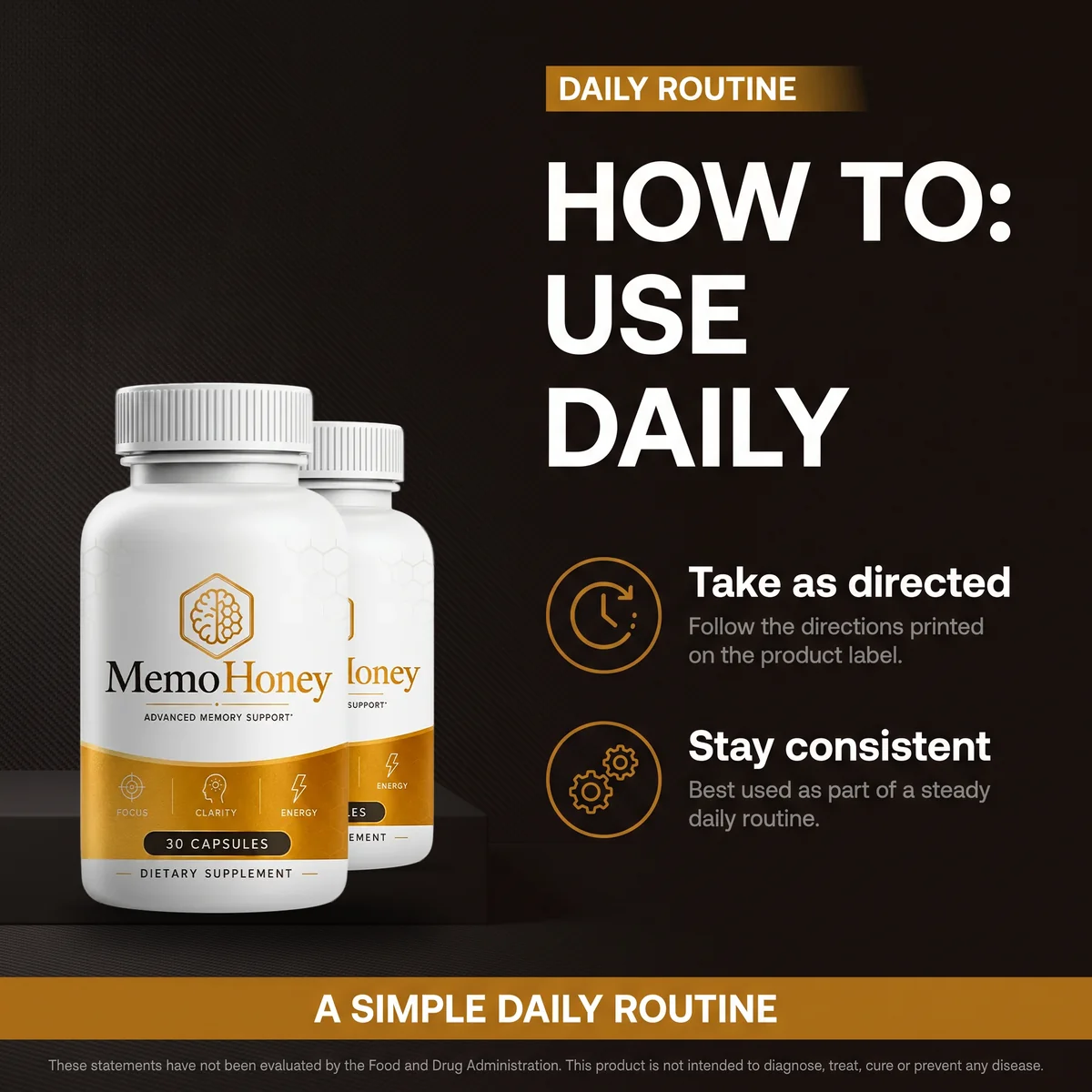
So there is a number to hold against a label: 35 mg a day, from everything you take combined. The difficulty here is the obvious one — this artwork prints no figure to put into that sum.
| Figure | Value | Where it comes from |
|---|---|---|
| US tolerable upper intake level | 35 mg a day | the 2017 review |
| European upper intake level | 10 mg a day | the same review |
| Where major adverse effects appeared | below 1,000 mg a day | the same review, for nicotinic acid in healthy individuals |
| Dose in the HPS2-THRIVE trial | 2 g a day of extended-release niacin | Landray 2014 |
| Amount in this capsule | Not in the supplied artwork | a question for the seller |
Four published figures and one blank. The blank is the one a buyer needs.
Why the scary niacin trial does not apply here
Search niacin and you will quickly meet HPS2-THRIVE, which randomised 25,673 high-risk patients to extended-release niacin with laropiprant or placebo and found serious adverse effects. It is a real trial with a real result and it is quoted constantly in supplement arguments.
It used two grams a day. That is a lipid-lowering, prescription-scale intervention, roughly sixty times the upper intake level for a vitamin. Reading it as a warning about a vitamin-scale amount in a capsule is the same mistake as reading a paracetamol overdose study as a warning about a headache tablet.
What does transfer is narrower and worth knowing. Nicotinic acid interacts with statins in a way that raises myopathy risk at lipid doses, it affects blood glucose, and it causes flushing. All three are dose-dependent. Whether any of them is relevant to this capsule depends on an amount and a form the artwork does not state, which is the honest end of that sentence.
The MemoHoney side effects page has the full list
Two documented effects, three medicine classes worth raising first, and the amounts each was documented at — set beside what this capsule is known to contain, which is six names.
Two bottles $158 · six bottles $294 · 60-day money-back guarantee
Order MemoHoney From This CounterLot MEM-26/ME-7435 · one a day, 30 to a bottle · ships from the United States
Adding up across everything you take
Upper intake levels apply to a total, not to a product. A reader taking a multivitamin, a B-complex and a fortified breakfast cereal is already some way into a 35 mg allowance before this capsule, and none of those is unusual.
The practical move is to read the panels you do have. A multivitamin will print its niacin in milligrams with a percent Daily Value beside it; a cereal box will too. Add them up, and then ask the seller for the missing figure rather than guessing at it.
- Read the niacin line on every other supplement you take.
- Include fortified foods; breakfast cereals are often the largest single source.
- Ask the seller for this capsule's figure in writing, naming the lot.
- If you flush within half an hour of a capsule, the form is nicotinic acid and the amount is not trivial.
- Tell whoever prescribes a statin what you are taking, as you would with anything else.
The two forms, and how to tell which one you have
Nicotinic acid and nicotinamide are both niacin and they behave differently enough that the distinction matters on any label that names an amount.
Nicotinic acid flushes. It binds a receptor in the skin and produces warmth and redness across the face and chest, usually within half an hour and usually passing within one. It is harmless, it is startling the first time, and it is the reason extended-release forms exist. At pharmacological doses it also lowers LDL and raises HDL, which is how it became a lipid medicine.
Nicotinamide does neither. No flush, no lipid effect, and a different tolerability profile at higher amounts.
The practical test is the one your own skin performs. If you flush within half an hour of a capsule, the form is nicotinic acid and the amount is not trivial. If you never flush, either the form is nicotinamide or the amount is small, and there is no way to tell which from the outside.
This artwork names neither the form nor the amount, which means it is asking you to take the whole of that on trust. The over-the-counter survey is the reason that matters: products sold for the same purpose differed widely in their free nicotinic acid content.
What niacin does not do
Correcting a deficiency and improving a normal state are different things, and the niacin literature is a clean example of the difference.
Severe deficiency causes pellagra, and treating pellagra resolves its dementia. That is a dramatic and well-documented fact about a deficiency disease, and it is not evidence that extra niacin improves memory in somebody who is not deficient. In a fortified food supply, most readers of this page are not deficient.
The observational work points the same way without settling it. The Chicago cohort measured intake from food and found an association; a 2025 analysis of B vitamin intakes reports similarly. Neither randomised anybody to a capsule, and people who eat more niacin-rich food differ from people who eat less in a great many other respects.
So the honest position is that niacin is a sensible thing to have in a memory formula, that a capsule is a sensible way to deliver it, and that nobody should expect it to do anything dramatic in somebody already eating a normal diet.
The honest position on niacin in this formula
Of the six names on this label, niacin is the one whose useful amount fits comfortably in a capsule. It is also the one with a real, if indirect, connection to cognition, and the one with a published ceiling a reader can check against.
That makes it the most defensible ingredient here and, in a way, the most frustrating. A label that printed one number — the niacin in milligrams — would let a buyer do the only piece of arithmetic that matters for safety, and it would cost the manufacturer nothing.
The ingredients page sets niacin beside the other five, and the choosing guide turns this kind of reading into a method you can run on any bottle.
- 2004: Dietary niacin and the risk of incident Alzheimer's disease and of cognitive decline — Morris MC and co-authors (J Neurol Neurosurg Psychiatry 2004;75(8):1093-9), PubMed record 15258207
- 2017: Definition of a tolerable upper intake level of niacin: a systematic review and meta-analysis of the dose-dependent effects of nicotinamide and nicotinic acid supplementation — Minto C and co-authors (Nutr Rev 2017;75(6):471-490), PubMed record 28541582
- 2014: Effects of extended-release niacin with laropiprant in high-risk patients — Landray MJ and co-authors (N Engl J Med 2014;371(3):203-12), PubMed record 25014686
- 2003: Varying cost and free nicotinic acid content in over-the-counter niacin preparations for dyslipidemia — Meyers CD and co-authors (Ann Intern Med 2003;139(12):996-1002), PubMed record 14678919
- 2025: Associations between dietary B vitamin intakes and cognitive function among elderly individuals: An observational study — Chen Q and co-authors (Nutrition 2025;134:112716), PubMed record 40056822
- Niacin: Fact Sheet for Health Professionals — published by Office of Dietary Supplements, National Institutes of Health, read on the publisher’s own site (ods.od.nih.gov)
- Memory — published by MedlinePlus, U.S. National Library of Medicine, read on the publisher’s own site (medlineplus.gov)