MemoHoney Official Website › Choosing A Memory Supplement
Choosing A Memory SupplementChoosing a memory supplement: eight things to check on the label
Start with the Supplement Facts panel, because a product without one cannot be compared with anything. Then the form of each ingredient, the amount against its research, the serving size, the other ingredients, the claims, the seals and the refund window. Eight checks, in that order, and most products fail one of the first three.
A method rather than a recommendation. It works on any bottle, including the one this counter sells.
The eight checks, in order
Is there a Supplement Facts panel?
A box, ruled, listing a serving size, the number of servings, each ingredient and an amount. It is the one thing that makes a product comparable with any other product, and it is the check that takes three seconds. A bottle without one is a bottle you are taking on trust, and that is a decision rather than an oversight.
Is each amount printed, or is there a proprietary blend?
A proprietary blend gives a total for several ingredients and no breakdown. It is legal and it is the commonest way a label satisfies the rule while answering nothing. If four ingredients share a 500 mg blend, the fourth one could be a pinch.
What FORM is each ingredient?
Form decides whether an ingredient matches its research. Nettle root and nettle leaf are different chemistry. Nicotinic acid and nicotinamide behave differently, and a survey of over-the-counter niacin products found the free nicotinic acid content varied widely between them. A label naming the ingredient but not the form has answered half the question.
How does the amount compare with the trials?
This is the check that takes a search engine and five minutes, and it is where most products come apart. Find one trial of the ingredient, note the daily amount, and hold it against the label. A tenth of a trial dose is not a smaller version of that trial's result.
What is the serving size?
Two capsules twice a day is four capsules, and a 120-capsule bottle is then a month rather than four. This is where per-day cost is really decided, and it is the number comparison sites most often get wrong.
What is in the other ingredients line?
The capsule shell, the flow agents, the fillers. It is where a gelatin shell shows up on a product advertising a vegetarian seal, and it is the quickest contradiction to find on any label.
What do the claims and the seals actually say?
Structure/function claims are the ceiling and a disease claim is a red flag. GMP and FDA registration are statements about a facility rather than about the contents, and a clinician formulated mark that names nobody is unfalsifiable as printed.
What is the refund window, in days?
A number and a telephone number. Then ask whether the window covers opened bottles, who pays return postage, and whether any use is required before a claim. Those three answers separate a guarantee from a returns policy.
What a good answer looks like, and what a bad one looks like
| Check | A good answer | A bad answer |
|---|---|---|
| Panel | A full panel with a serving size and every amount | No panel, or a photograph too small to read |
| Blend | Every ingredient with its own figure | A proprietary blend with one total |
| Form | The salt, the plant part or the standardisation named | The bare ingredient name |
| Amount vs research | Within reach of a published dose | A fraction of it, or unknowable |
| Serving | One or two capsules, stated clearly | A serving size buried under the panel |
| Other ingredients | A short list you can read | A long list, or a contradiction with a seal on the front |
| Claims | Support language with the disclaimer beside it | Treats, cures, reverses, or a clinical-sounding word with nothing behind it |
| Refund | A number of days and a telephone number | Satisfaction guaranteed with no figure |
Most honest products fail one or two of these. A product that fails five is telling you something.
Applied to the product this counter sells, the method gives a mixed result and the ingredients page says so: no panel, no amounts, forms named for four of the six, research amounts far above anything a capsule holds, a clear serving size, a stated sixty-day window and a telephone number. Publishing a method that scores your own product imperfectly is the only way a method is worth anything.
Three things that look like evidence and are not
A certificate reference
A code on a page looks like a laboratory result and is an index entry. A real certificate of analysis names the laboratory, the date, the lot, the methods and the findings. Ask for the document, not the number.
A clinician with no name
Formulated by doctors with nobody named cannot be checked by anybody. One name and one profession turns it into a fact you can verify in ninety seconds.
A wall of seals
Seals are cheap to print and mostly describe a building. Six emblems where a Supplement Facts panel could have gone is a design decision about what to put in front of a buyer.
The fourth thing, and the one with a genuine literature behind it, is an ingredient list that reads like pharmacology. An analysis published in 2022 found the unapproved drug centrophenoxine in supplements sold for cognitive enhancement. Unfamiliar molecules on a memory label are worth a search before a purchase.
The question to ask before any of the eight
What is this for? If the honest answer is that somebody's memory has changed in a way other people have noticed, then no label check helps, because the purchase is the wrong move. MedlinePlus sets out what is worth reporting, and an assessment does not stop anybody trying a supplement afterwards.
If the honest answer is that you are in reasonable health, sleeping badly, over fifty and would like to do something, then the eight checks above are worth running — after the hearing test and the blood pressure check, both of which have randomised evidence behind them and neither of which is sold in a bottle.
That ordering is the whole of the advice in this guide. Everything else is method.
Two checks that need a search engine, not a label
Six of the eight checks above are done standing in front of a bottle. Two need five minutes and a browser, and they are the two that separate a careful buyer from a hopeful one.
The first is the dose comparison. Take the lead ingredient, search its name with the word randomised, and read one abstract. You are looking for a single number: how much a day, for how long, in whom. Hold that against the label's figure. It is a crude test and it settles most products in this aisle within one search.
The second is the seller. Search the brand name with the word refund and read what people say about getting one. A company's returns behaviour is the part of a purchase you will meet if anything goes wrong, and it is far better documented online than any ingredient's effect.
You do not need the full paper. A PubMed abstract normally gives the design, the population, the dose and the finding in five sentences, and every citation on this website links straight to one. That is the whole reason they are linked.
Sources behind this guide
- Meyers CD, Carr MC, Park S, et al. Varying cost and free nicotinic acid content in over-the-counter niacin preparations for dyslipidemia. Ann Intern Med. 2003;139(12):996-1002. PMID 14678919. https://pubmed.ncbi.nlm.nih.gov/14678919/
- Cohen PA, Avula B, Khan I. The unapproved drug centrophenoxine (meclofenoxate) in cognitive enhancement dietary supplements. Clin Toxicol (Phila). 2022;60(10):1156-1158. PMID 35959800. https://pubmed.ncbi.nlm.nih.gov/35959800/
- Memory. MedlinePlus, U.S. National Library of Medicine. https://medlineplus.gov/memory.html
- Lin FR, Pike JR, Albert MS, et al. Hearing intervention versus health education control to reduce cognitive decline in older adults with hearing loss in the USA (ACHIEVE): a multicentre, randomised controlled trial. Lancet. 2023;402(10404):786-797. PMID 37478886. https://pubmed.ncbi.nlm.nih.gov/37478886/
- Williamson JD, Pajewski NM, Auchus AP, et al. Effect of Intensive vs Standard Blood Pressure Control on Probable Dementia: A Randomized Clinical Trial. JAMA. 2019;321(6):553-561. PMID 30688979. https://pubmed.ncbi.nlm.nih.gov/30688979/
- Questions and Answers on Dietary Supplements. U.S. Food and Drug Administration. https://www.fda.gov/food/information-consumers-using-dietary-supplements/questions-and-answers-dietary-supplements
- Using Dietary Supplements Wisely. National Center for Complementary and Integrative Health, National Institutes of Health. https://www.nccih.nih.gov/health/using-dietary-supplements-wisely
- DeKosky ST, Williamson JD, Fitzpatrick AL, et al. Ginkgo biloba for prevention of dementia: a randomized controlled trial. JAMA. 2008;300(19):2253-62. PMID 19017911. https://pubmed.ncbi.nlm.nih.gov/19017911/
- Yeung LK, Alschuler DM, Wall M, et al. Multivitamin Supplementation Improves Memory in Older Adults: A Randomized Clinical Trial. Am J Clin Nutr. 2023;118(1):273-282. PMID 37244291. https://pubmed.ncbi.nlm.nih.gov/37244291/
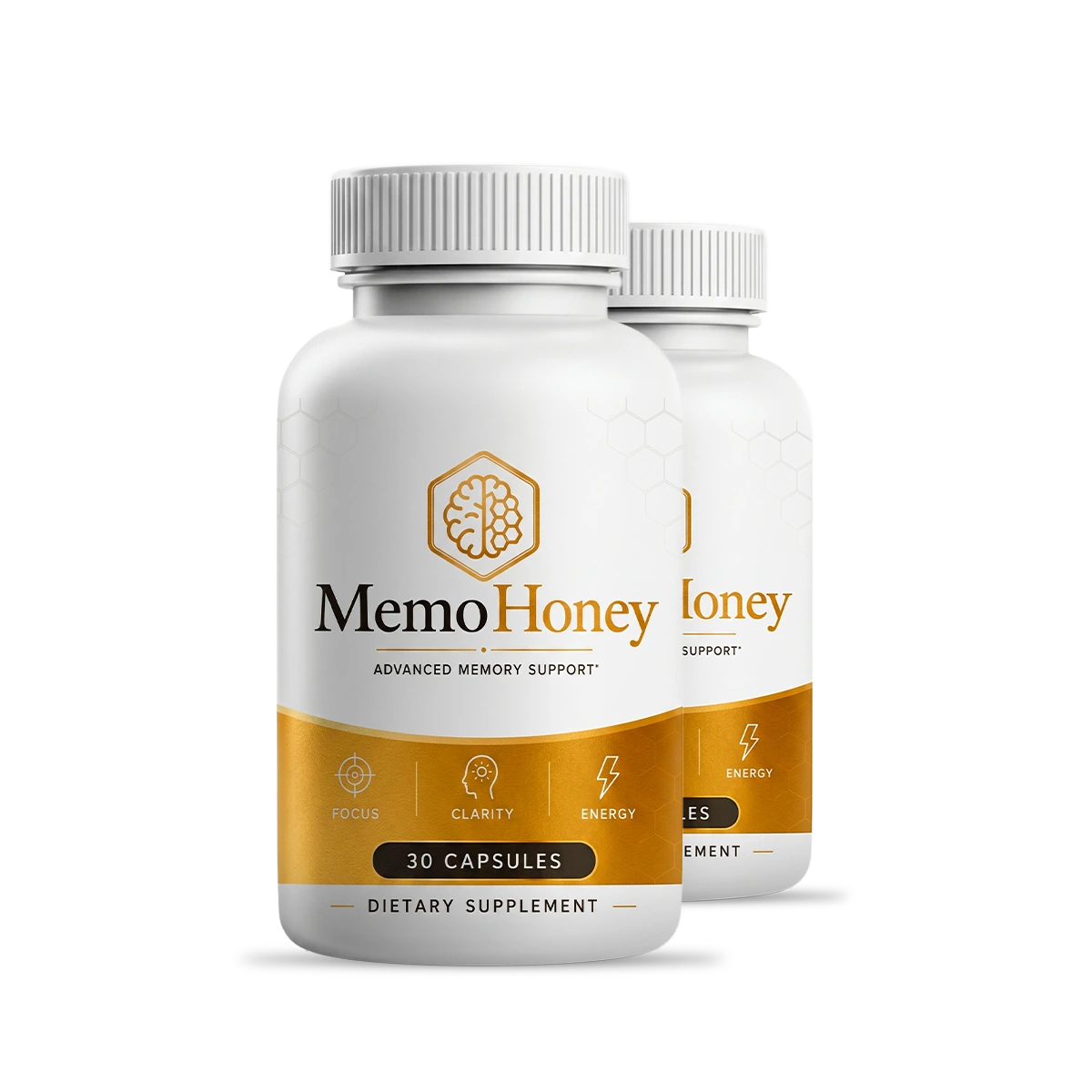
Run the eight checks on MemoHoney
The ingredients page prints what the research used, the testing page reads every emblem, and the guarantee page states the window in days. Check it against anything else on the shelf.
Two bottles $158 · six bottles $294 · 60-day money-back guarantee
Order MemoHoney From This CounterLot MEM-26/ME-7435 · one a day, 30 to a bottle · ships from the United States