MemoHoney Official Website › Memory Supplement Guide
Memory Supplement GuideThe memory supplement guide: what the evidence actually shows
The best-funded trial in this category gave 3,069 older adults ginkgo twice a day for six years and found no reduction in dementia. A daily multivitamin improved memory in a randomised trial. Hearing treatment, blood pressure treatment and sleep all have randomised evidence behind cognitive outcomes, and none of the three comes in a bottle.
A survey of what has been tested, what was found, and how to hold it.
The trial that defines the category
In 2008 the Ginkgo Evaluation of Memory study published its main result. It had randomised 3,069 adults aged 75 and over to 120 mg of ginkgo biloba twice a day or placebo, and followed them for a median of just over six years, looking for dementia. It found none: the extract did not reduce the overall incidence of dementia or of Alzheimer's disease, either in people with normal cognition or in those with mild cognitive impairment.
That result matters more than any single supplement finding, because ginkgo was the category's flagship. It had plausibility, centuries of traditional use, positive small trials and a standardised extract with a known chemistry. It was tested properly, at a real dose, for long enough, in the right population, and it did not work for the outcome that matters most.
A reader should take two things from it. First, that this category can be tested, which means claims in it are answerable rather than merely arguable. Second, that plausibility is not evidence, and that most products on the shelf have less behind them than the one that failed.
What has found something
| Intervention | What was tested | What was found |
|---|---|---|
| A daily multivitamin | Randomised, placebo-controlled, memory outcomes in older adults | Memory improved against placebo in the COSMOS-Web arm |
| Cocoa extract and a multivitamin | Randomised, cognitive outcomes in a large older cohort | COSMOS-Mind reported on both; the multivitamin arm is the one that carried the signal |
| Hearing treatment | 977 adults aged 70 to 84 with untreated hearing loss, randomised, three years | ACHIEVE compared hearing intervention with a health education control on cognitive decline |
| Blood pressure treatment | 9,361 adults with hypertension, randomised to intensive or standard control | SPRINT MIND reported on probable dementia and mild cognitive impairment |
| Sleep | Decades of mechanistic and interventional work | Memory consolidation is a function of sleep, not an association with it |
Five entries. Two are supplements, three are not, and the three that are not are the ones a reader is least likely to have been offered.
The pattern in that table is the single most useful thing in this guide. The interventions with the strongest evidence for cognition are the ones nobody sells in a capsule: treating a sense you have lost, treating a number your doctor already measures, and sleeping properly.
The multivitamin result is the interesting exception, and it is worth being precise about it. It is a modest memory effect from a cheap, widely available product with a printed label. It is not a claim that supplements in general work; it is a specific finding about a specific, very well characterised product.
The ingredients this category is built on
Walk along a shelf and you will find perhaps eight recurring ingredients. It is worth knowing where each one's evidence sits, because the marketing does not distinguish between them.
Ginkgo biloba has the largest trial and it was negative for dementia incidence. B vitamins have a real biological story: severe deficiency of niacin causes pellagra, whose third classical symptom is dementia, and an observational cohort of 3,718 older residents of Chicago found higher dietary niacin intake associated with lower Alzheimer's incidence and slower decline. That is a cohort about food rather than a trial of a capsule.
Amino acids feeding nitric oxide — arginine and citrulline — have good evidence for blood pressure and thin evidence for cognition. A 2025 meta-analysis found citrulline lowered blood pressure in middle-aged and older adults; one 2025 trial measured cerebrovascular function at 8.8 g a day, in athletes.
Beta-alanine and carnosine have two small and genuinely interesting results: 2.4 g a day of beta-alanine changed white-matter measures in the hippocampus and amygdala of adults aged 60 to 80, and 2 g a day of carnosine improved cognitive outcomes in the younger participants of one trial. Small, unreplicated, and more than most ingredients have.
- Amounts in the research are usually far larger than a capsule can hold.
- Blood pressure and exercise are the outcomes most of these ingredients were actually studied for.
- The cognitive results that exist are mostly small, short and unreplicated.
- The one intervention with a positive randomised memory result is the cheapest thing in the category.
Why gram amounts and capsules do not fit together
This is the structural problem in the whole aisle and it is rarely stated. Amino acid research is done with powders, measured in grams, taken in a scoop of water. Supplement commerce is done with capsules, because capsules are easy to swallow, easy to dose, easy to ship and easy to sell.
A capsule is a small container and a formula with six ingredients divides it six ways. When the research behind an ingredient used eight grams a day, a capsule containing some fraction of that is a different proposition, and the honest position is that nobody outside the manufacturer can say how different unless the amount is printed.
That is not an argument against capsules. It is an argument for reading the panel, and for treating a formula that does not print one as a formula you are taking on trust. Plenty of people are content to do that. The point is to know that you are.
How to think about a supplement you have already bought
Most readers of a guide like this already have a bottle in a cupboard. Three practical thoughts, in descending order of usefulness.
Take it consistently or stop. A capsule taken four mornings out of seven is a test of nothing, and the outcome most people describe at the end of a half-hearted month is the outcome of the half-heartedness.
Count something rather than feel something. Memory is the one outcome where the instrument doing the measuring is the thing being measured, so a diary beats a recollection by a wide margin.
And do the free things alongside it, not instead of it. If the sleep improves at the same time, the sleep has the better evidence, and the right conclusion at the end is a cheerful one: something worked, and the cheapest candidate gets the credit.
What would change this guide
- A large randomised trial of a combination product, at printed amounts, with a cognitive endpoint. Nothing like it currently exists.
- Replication of the beta-alanine imaging result in a larger sample.
- A citrulline trial in ordinary adults at rest rather than athletes mid-session.
- Any supplement trial that measures what buyers actually care about — names, appointments, where the keys are — rather than a battery of laboratory tasks.
Until then, the summary a reader can rely on is short. Treat your hearing. Treat your blood pressure. Sleep. Consider a multivitamin, which is cheap and has one positive randomised result. Everything past that point is a reasonable experiment on yourself, and should be bought as one.
Sources behind this guide
- DeKosky ST, Williamson JD, Fitzpatrick AL, et al. Ginkgo biloba for prevention of dementia: a randomized controlled trial. JAMA. 2008;300(19):2253-62. PMID 19017911. https://pubmed.ncbi.nlm.nih.gov/19017911/
- Yeung LK, Alschuler DM, Wall M, et al. Multivitamin Supplementation Improves Memory in Older Adults: A Randomized Clinical Trial. Am J Clin Nutr. 2023;118(1):273-282. PMID 37244291. https://pubmed.ncbi.nlm.nih.gov/37244291/
- Baker LD, Manson JE, Rapp SR, et al. Effects of cocoa extract and a multivitamin on cognitive function: A randomized clinical trial. Alzheimers Dement. 2023;19(4):1308-1319. PMID 36102337. https://pubmed.ncbi.nlm.nih.gov/36102337/
- Lin FR, Pike JR, Albert MS, et al. Hearing intervention versus health education control to reduce cognitive decline in older adults with hearing loss in the USA (ACHIEVE): a multicentre, randomised controlled trial. Lancet. 2023;402(10404):786-797. PMID 37478886. https://pubmed.ncbi.nlm.nih.gov/37478886/
- Williamson JD, Pajewski NM, Auchus AP, et al. Effect of Intensive vs Standard Blood Pressure Control on Probable Dementia: A Randomized Clinical Trial. JAMA. 2019;321(6):553-561. PMID 30688979. https://pubmed.ncbi.nlm.nih.gov/30688979/
- Yasser E, Ayache L, El Khayat H, et al. Sleep and memory consolidation: Neural and cognitive perspectives. Prog Brain Res. 2026;299:137-176. PMID 42547206. https://pubmed.ncbi.nlm.nih.gov/42547206/
- Morris MC, Evans DA, Bienias JL, et al. Dietary niacin and the risk of incident Alzheimer's disease and of cognitive decline. J Neurol Neurosurg Psychiatry. 2004;75(8):1093-9. PMID 15258207. https://pubmed.ncbi.nlm.nih.gov/15258207/
- Luo P, Chen J, Liu K, et al. Does l-citrulline supplementation and watermelon intake reduce blood pressure in middle-aged and older adults? A systematic review and meta-analysis of randomized controlled trials. Clin Nutr ESPEN. 2025;69:653-664. PMID 40789388. https://pubmed.ncbi.nlm.nih.gov/40789388/
- Li A, Li H, Chen J. The effects of L-citrulline supplementation on cerebrovascular function during sprint interval training in taekwondo athletes. J Exerc Sci Fit. 2025;23(3):222-228. PMID 40474881. https://pubmed.ncbi.nlm.nih.gov/40474881/
- Ostfeld I, Zamir A, Ben-Zeev T, et al. β-Alanine supplementation improves fractional anisotropy scores in the hippocampus and amygdala in 60-80-year-old men and women. Exp Gerontol. 2024;194:112513. PMID 38971131. https://pubmed.ncbi.nlm.nih.gov/38971131/
- O'Toole TE, Amraotkar AR, Gao H, et al. Carnosine supplementation improves cognitive outcomes in younger participants of the NEAT trial. Neurotherapeutics. 2025;22(2):e00541. PMID 39919936. https://pubmed.ncbi.nlm.nih.gov/39919936/
- Using Dietary Supplements Wisely. National Center for Complementary and Integrative Health, National Institutes of Health. https://www.nccih.nih.gov/health/using-dietary-supplements-wisely
- Memory. MedlinePlus, U.S. National Library of Medicine. https://medlineplus.gov/memory.html
Where MemoHoney sits in all of this
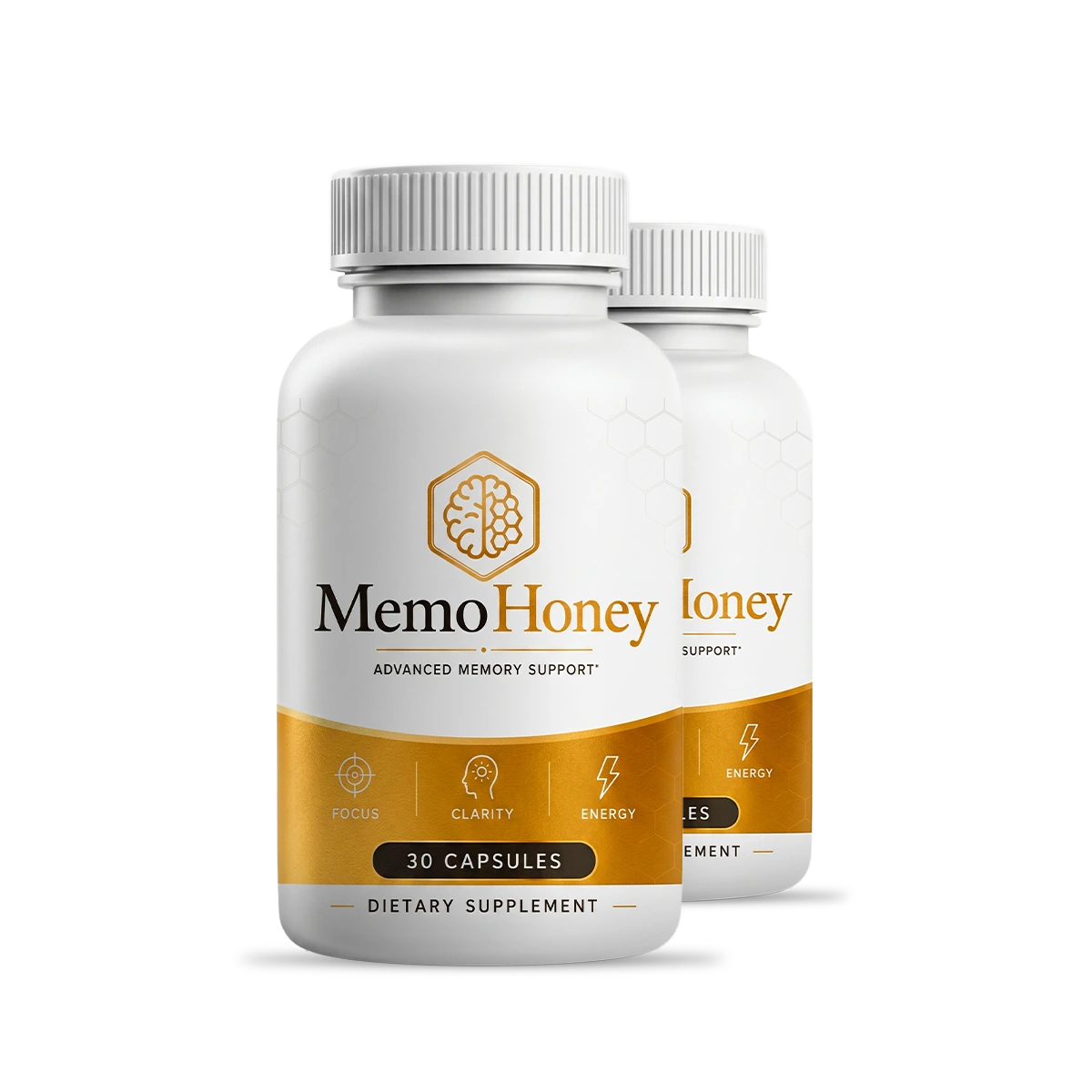
A once-daily capsule of six named ingredients with no printed amounts, sold on a 60-day window. The ingredients page prints what the research used so you can judge it for yourself.
Two bottles $158 · six bottles $294 · 60-day money-back guarantee
Order MemoHoney From This CounterLot MEM-26/ME-7435 · one a day, 30 to a bottle · ships from the United States