Lion's Mane for Memory: What the Evidence Actually Shows
Does lion's mane improve memory?
Small human trials suggest lion's mane may offer mild, short-term support for memory and mental clarity, most visibly in older adults with early complaints. The dramatic nerve-growth-factor claims, though, come almost entirely from lab and animal work. Treat it as gentle, gradual support — not a treatment for dementia or memory loss.
- The human data is modest: a few small, short trials point to mild cognitive support, not a dramatic overnight boost.
- Typical amounts studied land around 1–3 g/day of fruiting-body powder or extract, taken consistently for weeks.
- The famous NGF and "nerve regeneration" claims are largely preclinical — impressive in a dish, unproven at the dinner table.

Lion's mane for memory: separating the mushroom from the marketing
Search "lion's mane for memory" and you will meet two very different stories. The first, told by supplement ads and breathless social posts, is of a shaggy white mushroom that literally regrows your nerves and rewires your brain. The second, told by the actual human studies, is far more modest: a handful of small trials hinting at gentle cognitive support in some people, over weeks, at sensible doses. Both stories are talking about the same organism — Hericium erinaceus, the lion's mane mushroom — but only one of them is honest about the size of the effect. This article is about closing the gap between them.
That gap matters because expectations decide whether a supplement feels like a success or a scam. If you swallow a lion's mane capsule expecting the "nerve regeneration" the label implies, you will be disappointed on day three when nothing dramatic happens, and you will probably quit before the point at which the real, subtle effects have any chance to show up. If instead you arrive knowing the evidence is early, gentle and inconsistent, you can run a fair personal trial and judge it on its merits. Setting modest expectations is not pessimism here; it is the single best predictor of whether you will actually get value out of the mushroom.
Let's be clear about the ceiling before anything else. Lion's mane is a food and a dietary supplement, not a medicine. It does not cure, treat or prevent any disease, and it is not a therapy for dementia, Alzheimer's or age-related memory loss — the more sober trials that touch that territory are small, short and preliminary, and researchers themselves describe them as a starting point, not a conclusion. What the mushroom might offer a healthy adult is subtler: a chance at mild cognitive support, layered on top of the sleep, exercise and diet that do the heavy lifting.
What lion's mane actually is (and where the NGF story comes from)
Lion's mane is a genuinely striking edible mushroom — a cascade of soft white spines that looks more like a sea creature than a fungus — and it has a long culinary and traditional-use history in East Asia, where it is prized for a seafood-like flavour as much as for any wellness claim. So the base material is not exotic or novel: it is food, and a rather nice one at that.
The excitement in supplement marketing comes from two families of compounds found in the mushroom, usually called hericenones (concentrated in the fruiting body) and erinacines (concentrated in the mycelium, the root-like network). In laboratory work, these compounds have been shown to influence nerve growth factor, or NGF — a signalling protein that helps neurons grow, survive and maintain their connections. That is a real and interesting finding, and it is the seed of every "regrow your brain" headline you have ever seen about the mushroom.
Here is the crucial caveat the headlines leave out. Almost all of the NGF and "nerve regeneration" evidence comes from preclinical studies: isolated cells in a dish, or rodents given concentrated extracts, sometimes in doses and routes that do not translate to a person eating a capsule. A compound stimulating NGF in a petri dish tells you it is worth studying in humans; it does not tell you that a supplement will do the same thing in your skull. The leap from "impressive in the lab" to "works on your memory" is exactly where honest reading and marketing part ways — and it is a leap the current human evidence has not yet earned. If the very idea of a mushroom as a "smart drug" is new to you, our primer on what nootropics actually are and are not is a useful frame before you go further.
What the human evidence on lion's mane and memory really shows
Strip away the lab hype and look only at studies done in people, and the picture becomes small but not empty.
The most-cited work is a Japanese trial in older adults with mild cognitive complaints, who took lion's mane for several weeks and scored better on a cognitive scale than a placebo group while they were taking it — and, tellingly, whose advantage faded again after they stopped. There are a few other short trials, some looking at mood, sleep quality or subjective wellbeing rather than raw memory, with mixed and generally modest results. A small number of studies in younger, healthy adults have looked at things like speed of processing after a single dose or a few weeks, again with signals that are gentle at best.
The honest summary is this: the human trials are few, small, short and varied in what they measure, which is precisely why no serious researcher claims the case is closed. What they collectively suggest is a plausible, mild cognitive-support effect — most visible in older adults with early complaints, less clear in already-sharp young people, and reversible when the mushroom is stopped. That is a reasonable basis for a personal experiment. It is not a basis for the miracle framing the category loves, and pretending otherwise would be dishonest.
Impressive in a dish is not the same as proven at the dinner table. The NGF story is real science; the leap to "it will fix your memory" is marketing filling a gap the human trials have not closed.
Judge any brain supplement by its label, not its promises
The same rule that keeps you honest about lion's mane applies to every formula on the shelf: read the amounts, not the adjectives. MemoHoney is a stimulant-free daily capsule whose full Supplement Facts panel — every ingredient and milligram — is transcribed on our main page, alongside today's official-store pricing and the 60-day money-back guarantee. Decide with the numbers in front of you.
Get OfferHow much lion's mane do people take? The 1–3 g/day question
Because there is no official recommended dose, the sensible reference point is simply the range used in the human studies — and that lands, broadly, at 1 to 3 grams a day, usually split across the day and taken consistently for at least eight to sixteen weeks. Consistency and patience matter more than chasing a big number: if the mushroom does anything, it does it slowly, so a fair trial is measured in months, not days.
Two label traps are worth knowing before you buy. First, powder versus extract. A gram of plain dried fruiting-body powder is not the same as a gram of a concentrated 8:1 extract; the extract packs far more of the active compounds per gram, so "1 gram" on two different bottles can mean very different things. Second, fruiting body versus mycelium-on-grain. A lot of cheap lion's mane is grown as mycelium on a grain substrate and sold without separating the two, which means a chunk of what you are paying for by weight can be leftover grain (starch), not mushroom. Neither of these is disqualifying, but they explain why price and results vary so wildly across the category, and why reading the panel closely beats trusting the front of the jar.
The practice of turning a bottle over and decoding what the milligrams actually represent is the single most useful supplement-buying skill there is. If you want a step-by-step walkthrough that works on lion's mane or anything else, our guide to reading a Supplement Facts panel like a buyer, not a fan covers exactly these traps.
Three myths about lion's mane, answered honestly
A handful of confident-sounding claims follow lion's mane around the internet. Here are the three that most deserve a straight answer.
Myth 1: "Lion's mane regrows your brain." This is the NGF story stretched past breaking point. Yes, compounds in the mushroom can influence nerve growth factor in the lab; no, that does not mean a daily capsule regenerates neurons in a healthy human brain. The human evidence shows, at most, mild support on cognitive tests — a world away from "regrowth." When you see the regeneration claim stated as fact, you are reading marketing that has quietly swapped a petri dish for a person.
Myth 2: "You'll feel it kick in like caffeine." You almost certainly will not, and if you do, be suspicious of what else is in the product. Lion's mane is not a stimulant; it has no caffeine-like jolt, and its plausible effects are slow, cumulative and subtle. Expecting an acute buzz is the fastest route to wrongly concluding it "does nothing" — you are testing it against the wrong yardstick. Judge it the way you would judge a diet change: over weeks, on the trend, not on the afternoon.
Myth 3: "Natural means risk-free." Natural and safe are not synonyms. Lion's mane has a good tolerability record, but it is a mushroom, so allergy is a genuine consideration, it can interact with certain medications, and it has not been well studied in pregnancy. "It's just a mushroom" is a reason to respect it, not to skip the same due diligence you would give any supplement.
Is lion's mane safe? What to watch for
For most healthy adults, lion's mane has a reassuring safety profile at culinary and supplement doses, and the side effects that do get reported tend to be mild — most commonly digestive upset such as stomach discomfort or loose stools, which often eases with a lower dose or taking it with food.
The caution that deserves a full sentence rather than fine print is allergy. Lion's mane is a mushroom, and people with mushroom or mould allergies can react to it; there are occasional reports of skin rashes or breathing symptoms, so anyone with a known fungal allergy should be careful or avoid it. Beyond that, because the mushroom may nudge blood sugar and may have a mild effect on clotting, anyone taking diabetes medication or blood thinners — and anyone scheduled for surgery — should clear it with a clinician first. It has not been well studied in pregnancy or breastfeeding, which is reason enough for those groups to skip it absent medical advice. None of this makes lion's mane dangerous; it makes it a supplement that earns the same respect as any other. For a broader map of what to keep an eye on across this whole category, see our companion piece on the brain supplement side effects worth watching for.

Where a formula like MemoHoney fits — and where it doesn't
Here is the part a sales page would blur, so we will say it plainly: MemoHoney contains no lion's mane whatsoever. Its Supplement Facts panel is built on an entirely different idea — L-arginine and L-arginine AKG, L-citrulline HCl and L-citrulline malate, beta-alanine and niacin — a stimulant-free, once-daily capsule aimed at the blood-flow and cellular-energy side of things rather than at the mushroom's NGF pathway. If lion's mane specifically is what you are after, MemoHoney is not that product, and we are not going to pretend otherwise.
So why mention it at all? Because the buying discipline is identical. Whether you are weighing a lion's mane extract or a formula like this one, the honest move is the same: read the label, check the amounts against what has actually been studied, and set expectations that match the evidence rather than the ad copy. What we like about writing up MemoHoney is precisely that its panel is fully disclosed — no proprietary blend hiding the doses — which makes it easy to judge on the numbers. If you are comparing memory ingredients more broadly, our timeline on why bacopa monnieri takes 8 to 12 weeks to show up and our breakdown of the DHA dose that actually matters for the brain are the natural next reads. The mushroom, the amino acids and the fish oil are different tools; the way you vet them should not be.
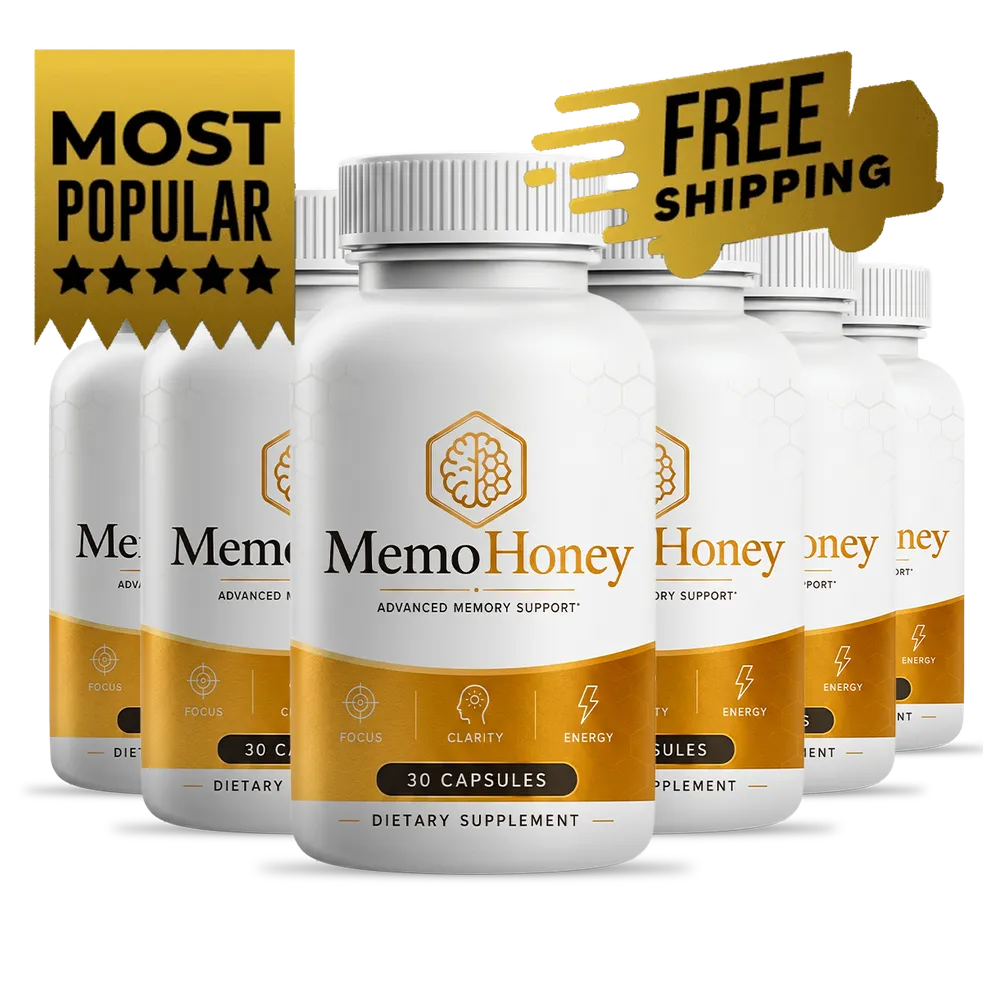
A stimulant-free daily formula, fully disclosed
MemoHoney is one capsule a day with no caffeine and no proprietary blend — every ingredient and amount is printed on the label and transcribed on our main page, next to the current official-store pricing and the 60-day money-back guarantee. No lion's mane; no mystery either.
Get OfferFrequently asked questions
Does lion's mane improve memory?
The honest answer is a cautious maybe. A handful of small, short human trials — often in older adults with mild complaints — have reported modest improvements on cognitive tests while people were taking lion's mane, with the benefit tending to fade after they stopped. That is a genuine but gentle signal, not a dramatic boost, and it is a long way from the sweeping claims marketing likes to make. It is best understood as mild, gradual support in some people, not a reliable memory upgrade for everyone.
What dose of lion's mane is used?
Human studies have most often used roughly 1 to 3 grams a day of lion's mane, usually as a fruiting-body powder or a concentrated extract, split across the day and taken consistently for at least eight to sixteen weeks. Extracts are more concentrated than plain powder, so the gram figure on a label does not always mean the same thing between products. There is no official recommended dose, so the studied range is the sensible reference point rather than a guarantee, and more is not automatically better.
Is lion's mane safe?
For most healthy adults, lion's mane has a good safety record at food and supplement doses, and reported side effects are usually mild — most often digestive upset. The main caution is allergy: it is a mushroom, so anyone with a mushroom or mould allergy should be careful, and skin or breathing reactions have occasionally been reported. Because it has not been well studied in pregnancy or breastfeeding, and because it may interact with blood-sugar or blood-thinning medication, those groups and anyone on regular medication should ask a clinician first.
Is lion's mane in MemoHoney?
No. MemoHoney contains no lion's mane at all — its Supplement Facts panel is built on L-arginine, L-arginine AKG, L-citrulline HCl, L-citrulline malate, beta-alanine and niacin, which work on the blood-flow and cellular-energy side rather than the mushroom pathway. If lion's mane is specifically what you want, you would buy it as a standalone product. We would rather tell you plainly what is and isn't on the label than let a marketing page blur the two.
References
- National Center for Complementary and Integrative Health (NIH) — background on mushrooms and dietary supplements.
- PubMed — Mori et al., randomized trial of Hericium erinaceus on mild cognitive impairment.
- PubMed — published literature on Hericium erinaceus (lion's mane) and cognition.
- NIH Office of Dietary Supplements — dietary supplement fact sheets and safety framing.
- Harvard Health Publishing — Foods linked to better brainpower.