Bacopa Monnieri Memory Timeline: Why Results Take 8 to 12 Weeks
How long does bacopa monnieri take to work?
Bacopa monnieri is a slow-build memory herb, not a quick fix. In the trials, measurable effects on memory and attention emerge after roughly 8 to 12 weeks of daily use at 300 to 600 mg standardised to 55 percent bacosides. Take it with food, stay consistent, and judge it after three months.
- Nothing to feel in week one — it works on a background process, so there is no acute lift to notice.
- Dose that was studied: 300–600 mg/day standardised to ~55% bacosides, taken with food to reduce stomach upset.
- The evidence: a meta-analysis of nine randomised trials found gains in attention, processing speed and working memory.

More people abandon bacopa monnieri than are failed by it. They buy a bottle, take it for a fortnight, feel exactly nothing, and conclude it doesn't work — when the truth is they quit before the herb had a chance to do the one thing it does. Bacopa is not a stimulant and was never meant to be felt in the moment; it is a patient, background memory herb whose effects, in the research, take two to three months to surface. This page lays out that timeline honestly so you can decide before you buy whether you have the patience the ingredient actually requires.
Why bacopa monnieri is a slow-build herb, not a quick fix
The reason bacopa disappoints impatient buyers is baked into how it's thought to work. Unlike caffeine, which blocks adenosine within an hour and gives you something to feel, bacopa monnieri appears to act on slower biological processes — the kind that change over weeks of consistent exposure rather than in a single dose. There is nothing to switch on in the afternoon. That is not a weakness in the product; it's the category it belongs to.
This is the crucial mental model: some ingredients run on an acute clock and some on a background clock, and bacopa is firmly on the background clock. If you understand which clock you're on before you start, you spend the first few weeks correctly — taking the dose, protecting your consistency, and not staring at yourself waiting for a lift that was never coming. The people who succeed with bacopa are, almost without exception, the ones who knew going in that week one would feel like nothing at all. For the wider picture of where an ingredient like this sits among stimulants and prescription drugs, our primer on what nootropics are and aren't maps the whole landscape.
The 8-to-12-week timeline, stage by stage
Here is a realistic account of what the first three months look like. Individual results vary, and this is a description of the arc reported in trials, not a promise.
Weeks 1–2: nothing, and that's correct. You will feel no cognitive change. The only things worth tracking now are tolerability — whether it agrees with your stomach — and building the daily habit. Any “boost” felt this early is almost certainly expectation, not the herb.
Weeks 3–6: still mostly quiet. This is the danger zone, the point at which most people quit. The biology is presumed to be accumulating in the background, but the subjective experience is usually unremarkable. Your job in this window is boring and decisive: keep taking it, same dose, same time, with food.
Weeks 6–8: the first hints. Some people begin to notice small things around here — a name that surfaces faster, a list held in mind a little more easily. It's subtle, and it's easy to miss if you're not paying gentle attention.
Weeks 8–12: the window the trials measured. This is where the research reports its effects. If bacopa is going to do anything for you, this is when a fair assessment becomes possible. Judge it here, not before.
Quitting bacopa at week three isn't a verdict on the herb. It's ending the experiment before the experiment could run.
The dose that was actually studied
Getting the timeline right is pointless if the dose is wrong, and dose is where a lot of cheap bacopa products quietly fail. The positive trials clustered around 300 to 600 mg per day of an extract standardised to roughly 55% bacosides — the bacosides being the active compounds the research is really about. That word standardised is doing heavy lifting: 300 mg of a raw, unstandardised bacopa powder is not the same dose as 300 mg of a 55% bacoside extract, and a label that lists bacopa without telling you the standardisation is hiding the number that matters most.
So when you check a panel, you're checking two things, not one: the milligrams and the standardisation. If either is missing, you can't know whether you're taking a studied dose or an expensive pinch of the wrong thing. This is the same discipline we apply to every ingredient in our guide to reading a Supplement Facts panel, and bacopa is one of the ingredients it catches out most often.
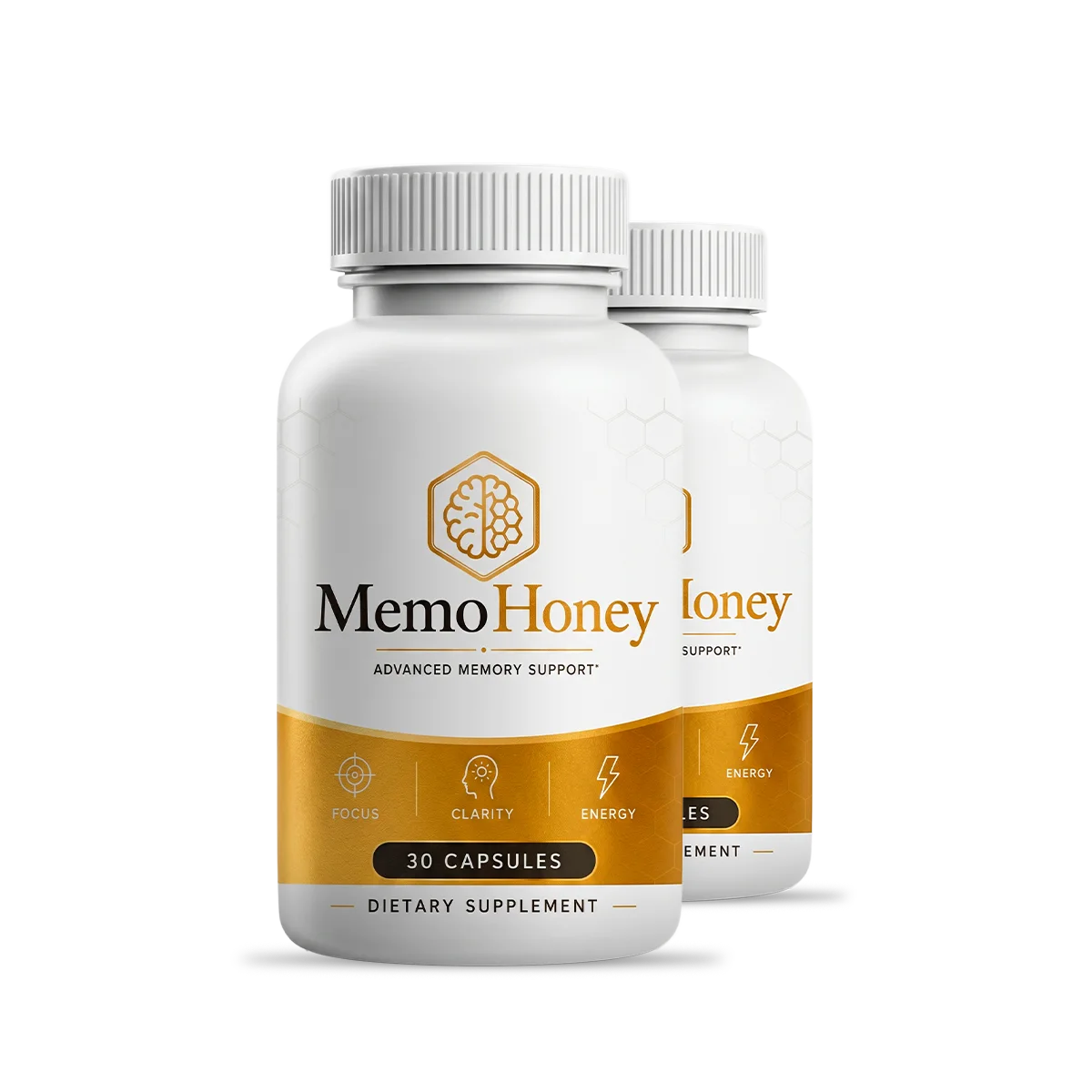
Prefer a label with nothing hidden?
MemoHoney doesn't contain bacopa — but it shares bacopa's honest standard: every ingredient and milligram printed, no proprietary blend. See the full panel, which amounts sit in a studied range and which don't, current pricing and the 60-day guarantee on our main page.
Get OfferWhat the evidence actually shows
Bacopa is one of the better-studied herbal nootropics, which is exactly why honesty about it is possible. A meta-analysis pooling nine randomised controlled trials concluded that bacopa monnieri improved attention, information-processing speed and working memory compared with placebo, with the most consistent signal appearing on tests of delayed word recall. In plain terms: across several properly controlled studies, people taking bacopa remembered and processed a little better than people taking a dummy pill.
Two honest caveats sit next to that finding. First, the effects are modest and specific, not sweeping — they show up on particular cognitive measures over weeks, not as a felt transformation. Second, bacopa supports normal memory function; it is a food supplement and does not treat, cure or prevent any disease, and anyone selling it as a remedy for a diagnosed memory condition has crossed a line the ingredient's evidence does not support. Held to that honest frame, bacopa is a rare thing in this aisle: a botanical with real, replicated, if unspectacular, human data.
| Question | Honest answer |
|---|---|
| Studied daily dose | ~300–600 mg standardised to ~55% bacosides |
| When effects emerge | Roughly 8–12 weeks of consistent daily use |
| What improves in trials | Attention, processing speed, working memory; clearest on delayed recall |
| Effect size | Modest and specific, not a felt boost |
| How to take it | Once daily, with food, to reduce stomach upset |
| What it can't claim | To treat, cure or prevent any disease |

Tolerability: why you take it with food
The most commonly reported downside of bacopa is gastrointestinal — some people get an upset stomach, cramping or loose stools, particularly on an empty stomach or at the higher end of the dose range. The simple, well-known fix is to take it with food, which markedly reduces the complaint for most people. Starting at the lower end of the range and giving your gut a week or two to settle before considering more is also sensible. As with any supplement, if a reaction is more than mild or doesn't settle, stop and speak to a clinician — and always check first if you take medication or have a health condition. Thinking clearly about tolerability up front is part of the same due diligence we cover in our overview of brain supplement side effects worth watching for.
Two objections worth answering before you start
“I felt nothing after a week, so it doesn't work.” This is the single biggest reason bacopa gets abandoned, and it rests on a category error — judging a background ingredient by an acute standard. Feeling nothing in week one is the expected result, not a failure. The only honest test is the 8-to-12-week one, and the only way to run it is to not quit in week three.
“If I double the dose, will it work faster?” No. Bacopa's timeline appears to be driven by cumulative daily exposure, not by the size of a single dose, so a larger amount mainly raises the odds of stomach upset without buying you speed. Consistency is the accelerator here, not milligrams — the same lesson that applies when you're weighing any formula on how to compare the best brain supplements by studied dose rather than by hype.
How to run your own fair 12-week bacopa trial
Because bacopa's effect is subtle and slow, the way you test it matters as much as the product you choose. Run it like a proper experiment and you'll get a real answer; run it sloppily and you'll be guessing either way. A few rules make the difference.
Pick a standardised extract and lock the dose. Choose a product that states its bacoside percentage, settle on a dose in the 300–600 mg range, and don't change it partway through. Moving the dose resets the clock on your own experiment.
Anchor the habit to something automatic. Adherence, not milligrams, is the thing most likely to decide your result. Tie the capsule to breakfast or brushing your teeth so a missed day becomes rare, and take it with food to keep your stomach onside.
Measure something, however crude. Memory of your own memory is unreliable, and expectation quietly colours it. Jot a one-line note each week — how often you lost a word, how easily you held a short list — so that by week twelve you're comparing observations, not moods.
Change one variable at a time. If you also overhaul your sleep, start caffeine, or add three other supplements the same week, you'll never know what did what. Bacopa deserves a clean lane if you want a clean verdict.
Set the review date now. Put “assess bacopa” in the calendar twelve weeks out, on the day you start. That single act is the best defence against quitting in the week-three dip, because you've pre-committed to letting the experiment finish.
How MemoHoney fits — and where it doesn't
In the interest of the same honesty we're asking of every label: MemoHoney does not contain bacopa monnieri. It is a different kind of product — a non-stimulant, once-daily formula built on L-arginine and L-arginine AKG, L-citrulline HCl and L-citrulline malate, beta-alanine and niacin, aimed at a vascular and nutrient angle rather than at bacopa's memory-herb mechanism. If a bacopa extract is specifically what you're after, MemoHoney is not that product, and we'd rather tell you plainly than blur the line.
Where the two overlap is temperament. Both are background, slow-clock supports judged over weeks rather than felt in an afternoon, and both are best assessed against the numbers on the panel. Some people do choose to stack a standalone bacopa extract with a vascular formula like MemoHoney; there's no obvious conflict, though the sensible rules apply — keep doses reasonable, change one thing at a time, and clear it with your doctor first if you take medication. What MemoHoney offers, whether or not bacopa is in your routine, is a fully disclosed label you can actually evaluate: every ingredient, every milligram, no proprietary blend.
See a memory-support label with nothing hidden
Every ingredient and milligram on the MemoHoney panel is transcribed in full on our main page — which amounts sit in a studied range and which don't, today's official-store pricing, and the 60-day guarantee terms. The same transparency this article asks you to demand of any bacopa product.
Get OfferFrequently asked questions
How long does bacopa take to work?
Plan on 8 to 12 weeks of daily use before you judge it. Bacopa monnieri is a background, slow-build herb: in the trials, measurable improvements in memory and attention appear after weeks of consistent dosing, not in the first hour or the first week. If you stop at two or three weeks because you feel nothing, you have simply ended the experiment before it could produce a result.
What is the right bacopa dose?
Most positive trials used roughly 300 to 600 mg per day of an extract standardised to about 55 percent bacosides, the active compounds. The standardisation matters as much as the milligram figure, because 300 mg of an unstandardised powder is not the same dose. Take it once daily with food, keep the amount identical day to day, and let consistency rather than a bigger dose do the work.
Does bacopa really improve memory?
The evidence is modest but real. A meta-analysis pooling nine randomised controlled trials found bacopa improved attention, information-processing speed and working memory versus placebo, with the clearest signal on delayed recall. The effects are small and specific rather than dramatic, and they show up on cognitive tests over weeks. Bacopa supports normal memory function; it does not treat, cure or prevent any disease.
Can I take bacopa alongside MemoHoney?
MemoHoney does not contain bacopa — it is a non-stimulant formula built on L-arginine, L-citrulline, beta-alanine and niacin, which act on different pathways such as blood flow. There is no obvious conflict between a daily bacopa extract and MemoHoney, and some people stack a slow memory herb with a vascular formula. As with any combination, keep doses sensible, change one variable at a time, and check with your doctor first if you take medication or have a health condition.
References
- NIH Office of Dietary Supplements — Dietary supplement fact sheets.
- National Center for Complementary and Integrative Health (NIH) — Dietary and Herbal Supplements.
- PubMed — meta-analysis of Bacopa monnieri and human cognition (randomised controlled trials).
- PubMed — wider literature on bacopa monnieri and memory.
- Harvard Health Publishing — Foods linked to better brainpower.