Nootropics Explained: What They Are and What They Aren't
What is a nootropic in plain terms?
A nootropic is any substance taken to support cognition — attention, memory or mental stamina. Over-the-counter nootropics are food supplements, not medicines, so they cannot legally claim to treat disease. Their effects are usually modest, ingredient-specific and slow, and the honest ones sell support, not a cure.
- The term was coined in 1972 by Romanian scientist Corneliu Giurgea, from Greek roots meaning “to bend the mind.”
- “Nootropic” is a category, not a compound — it spans prescription drugs, everyday caffeine and shelf supplements, which have wildly different evidence.
- The realistic ceiling is support, not transformation: measured effects are small and specific to the ingredient and dose.

Few words in the supplement aisle carry as much hope — and as much marketing exhaust — as nootropics. Type it into a search bar and roughly seventy-four thousand people a month are doing the same thing, most of them hoping for one clean answer: is there a pill that makes me sharper? This page is the honest version of that answer. Nootropics are real, the category is legitimate, and a handful of ingredients have earned genuine, if modest, evidence. But the gap between what the word implies and what the bottle does is where almost everyone gets misled, so the job here is to close that gap rather than widen it.
What the word nootropics actually means
The term was coined in 1972 by the Romanian chemist and psychologist Corneliu Giurgea, who built it from the Greek noos (mind) and tropein (to turn or bend). He had a specific compound in mind — piracetam — and a specific idea: a substance that improved learning and memory, protected the brain, had very low toxicity and few side effects. In his original framing a true nootropic was almost defined by its gentleness. It was supposed to be the opposite of a sledgehammer.
Notice what has happened to the word in the half-century since. It has been stretched to cover almost anything anyone takes to think better: prescription stimulants, a strong espresso, herbal extracts, amino acids, and a grey market of research chemicals that Giurgea's careful, low-toxicity definition would have excluded outright. That stretching is the root of most confusion. When a single label is elastic enough to include a cup of coffee and an unapproved lab compound, the label stops telling you anything useful about safety or effect. It only tells you about the buyer's intention.
So the first honest correction is this: nootropic is a category, not a compound. Asking “do nootropics work?” is like asking “does food help?” The answer depends entirely on which one, at what dose, for how long, in whom.
The “smart drug” myth, deflated
The phrase “smart drug” does a lot of quiet damage. It borrows the cultural image of a tablet that reorganises your intellect on a Tuesday afternoon — the film-poster version of cognition, a switch flipped from dim to brilliant. No over-the-counter product does this, and it is worth being blunt about why the fantasy is so durable. It sells. A capsule that promises to make you temporarily smarter is a far easier thing to market than one that promises to modestly support a background process over eight weeks if you happen to be short of something.
The measurable reality is deflating by comparison. The best-evidenced ingredient in the entire space is caffeine, which is genuinely effective for alertness and vigilance — and which nobody markets as a miracle because it is forty cents a cup. Beyond that, the effects reported in the literature are small, they show up on narrow laboratory measures like reaction time or delayed word recall rather than on anything as grand as “intelligence,” and they are frequently inconsistent between studies. That is not a scandal. It is simply what the honest end of the category looks like, and recognising it is the single most protective thing a buyer can do.
Three different things people call nootropics
Underneath the one word sit at least three families that behave completely differently. Blurring them is why so many people feel cheated.
Prescription cognitive drugs. Medicines such as those used for attention disorders, or drugs prescribed for specific memory conditions, are potent, regulated, and intended to treat diagnosed illness under medical supervision. They are sometimes misused off-label in pursuit of a study edge, which is both a legal and a health risk, and they are categorically not what you are buying when you order a supplement. A food supplement cannot and should not be compared to a prescribed medicine on power — they live in different worlds with different rules.
Stimulants. Caffeine, and the caffeine-plus-L-theanine pairing, sit here. They do something you can feel within an hour, they are the best-studied acute performers, and they come with a familiar tax: tolerance, and a sleep cost if taken too late in the day. A stimulant is a real tool, but it is borrowing alertness against tonight's rest, not creating new cognitive capacity.
Over-the-counter supplement nootropics. This is the shelf category — botanicals like bacopa, amino acids, omega-3s, B-vitamins and vascular formulas. Legally these are food supplements. That single fact carries most of the rules that matter, and it is the subject of the next section.
A nootropic that shows its whole label
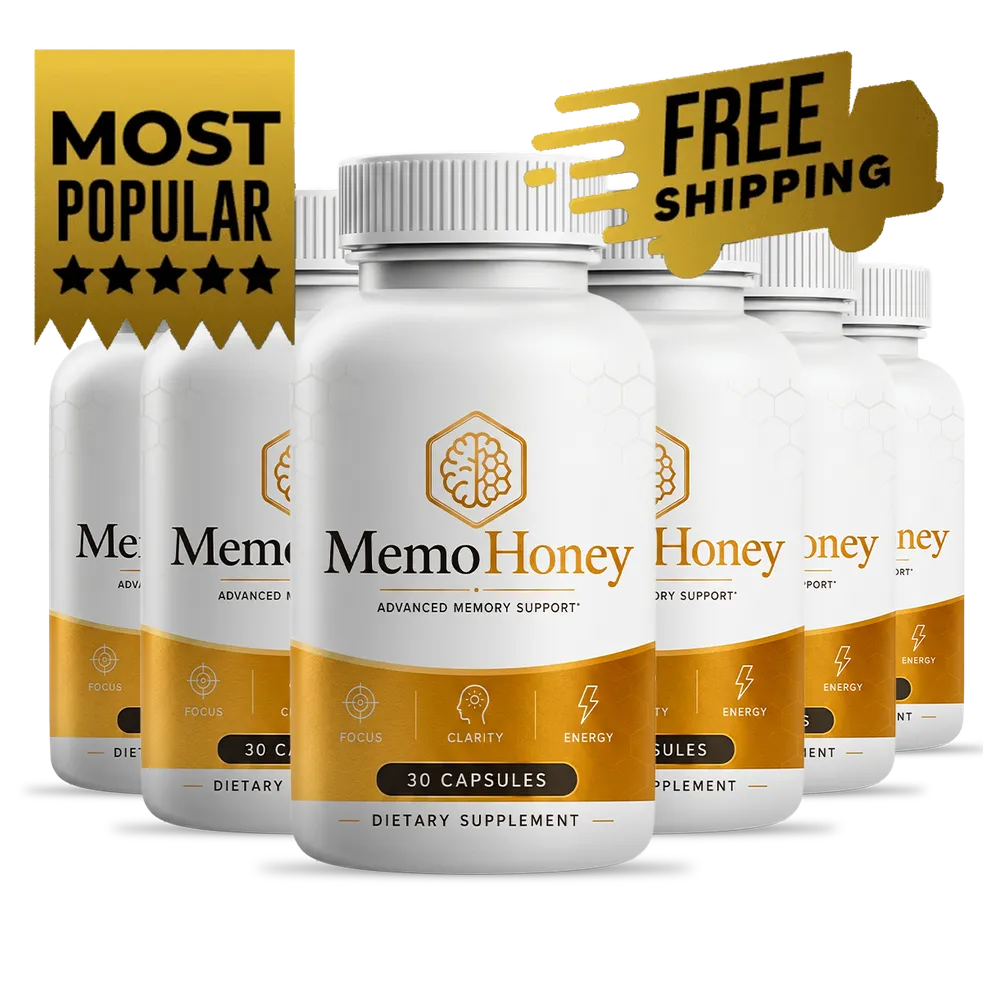
If you would rather judge a formula by its numbers than its adjectives, MemoHoney is a once-daily, caffeine-free capsule with every ingredient and milligram printed on the panel and transcribed on our main page — alongside today's official-store pricing and the 60-day guarantee.
Get OfferWhat over-the-counter nootropics can and cannot claim
Because shelf nootropics are regulated as food supplements rather than as drugs, there is a hard line around what they are permitted to say. They may make general structure-and-function statements — language about supporting normal cognitive function or contributing to normal mental performance, for the ingredients where that is allowed. They may not claim to diagnose, treat, cure or prevent any disease. When a supplement's copy strays into promising to reverse a memory condition or to work like a drug, it has stopped describing a supplement and started making a claim the law does not permit it to make.
This matters to you as a shopper in a very practical way: the loudness of the promise is inversely related to its trustworthiness. A label that says it may help support normal memory as part of a healthy lifestyle is playing by the rules. A sales page that says it “restores” your memory or “cures” forgetfulness is either breaking them or hoping you won't notice the disclaimer in the footer. Learning to read the difference is worth more than any single ingredient, and our walkthrough on how to read a Supplement Facts panel is built to turn that instinct into a checklist.
The regulatory frame also explains why effects are modest by design. These products are foods, not therapeutics. They are not permitted to be, and generally are not formulated to be, powerful in the way a drug is. That is a feature for safety and a limit on ambition at the same time.
Three myths worth retiring
Most disappointment in this category traces back to one of three beliefs. Each is worth naming and setting down.
Myth one: one pill equals instant genius. No supplement encodes information you did not study or manufactures a skill you do not have. Memory formation requires attention to the thing being remembered; a capsule cannot substitute for the encoding step. The most a background formula can do is nudge the conditions — blood flow, a nutrient status — in which your own effort operates.
Myth two: “natural” means it works, and means it's safe. Natural tells you where a molecule came from, not whether it does anything or whether the dose is sensible. Plenty of well-evidenced compounds are synthetic; plenty of botanical extracts have thin evidence. And “natural” is no guarantee of safety — interactions with medication are real regardless of a plant's origin story, which is exactly why a conversation with a clinician beats a marketing adjective.
Myth three: if it's on sale, it must be proven. Supplements reach the shelf without pre-market approval of efficacy. Being available for purchase is not evidence that a formula does what its label implies; it only means it cleared a much lower bar than a medicine does. The proof you should look for is in the ingredient literature and the dose on the panel, not in the fact that somebody is willing to sell it to you.
How to judge any nootropic honestly
Strip away the branding and a sober evaluation comes down to a short list of questions. First, which ingredients are in it, and at what amount? An ingredient present at a fraction of the dose used in research is decoration, not medicine — the practice sometimes called “pixie-dusting.” Second, is there real evidence for that ingredient at that dose, and how strong is it? Caffeine's evidence is strong; a slow botanical's is modest and takes weeks; a trendy extract's may be a handful of small trials with no long-term data. Third, what is the honest timeframe? Acute ingredients act within an hour; background formulas are judged over eight to twelve weeks of consistent use, not on the first afternoon. Fourth, is the disclosure complete? A proprietary blend that hides individual amounts behind one total is asking you to buy on trust.
Run those four questions and most of the market sorts itself quickly. It also reframes the money question usefully: rather than comparing sticker prices, compare cost per genuinely studied dose, which is the arithmetic we lay out in our note on the cost-per-studied-dose math. A slow-building herb like bacopa is a good stress test for patience — if you want the realistic schedule, our piece on the bacopa monnieri memory timeline of 8 to 12 weeks shows why quitting at week three guarantees you learn nothing about whether it worked.
Where MemoHoney sits in the category
By the broad definition, MemoHoney is a nootropic: a supplement taken to support memory. More precisely, it is a non-stimulant, once-daily formula built on L-arginine and L-arginine AKG, L-citrulline HCl and L-citrulline malate, beta-alanine and niacin — a vascular and nutrient angle rather than a stimulant one. There is nothing in it designed to be felt in the hour before a meeting, which is the point: no jitters, no crash, and no interference with the sleep that does the real consolidation work.
We have been consistent that the amounts are mixed, and we will not pretend otherwise here. The niacin, at 47% of the Daily Value, sits in a meaningful range. The arginine and citrulline totals are real and honestly disclosed, though below the gram-scale doses used in most trials. The beta-alanine is a trace against research protocols measured in grams. What the panel has going for it is that every row carries a number — no proprietary blend, nothing hidden. That transparency is exactly the standard the four questions above are asking you to hold every nootropic to, MemoHoney included.
The honest bottom line on nootropics
Nootropics are not a myth, and they are not magic. They are a broad category of substances taken to support thinking, whose members range from a well-understood cup of coffee to unregulated compounds that Giurgea's original, safety-first definition would never have recognised. The over-the-counter end is regulated as food, its effects are modest and ingredient-specific, and its honest ceiling is support around the edges of your own habits — sleep, attention, retrieval practice — which still do the heavy lifting. Hold any bottle to the numbers on its panel and the evidence for its ingredients, and the “smart drug” hype falls away, leaving something smaller, slower and much more trustworthy in its place.
See the numbers before you decide
Every ingredient and every milligram on the MemoHoney panel is transcribed in full on our main page — which amounts sit in a studied range and which don't, today's official-store pricing, and the 60-day guarantee terms. Judge it the way this article asks you to judge any nootropic.
Get OfferFrequently asked questions
What is a nootropic, exactly?
A nootropic is any substance taken with the intention of supporting cognition — attention, memory, learning or mental stamina. The word covers a wide range, from a prescription medicine to a cup of coffee to a bottle of capsules on a shop shelf. What unites them is the goal, not a shared mechanism or a shared strength of evidence, which is why the single label hides enormous differences underneath it.
Are nootropics safe?
It depends entirely on which one, because 'nootropic' is a category, not a compound. A daily amount of caffeine is well characterised; a well-studied botanical at a sensible dose is generally well tolerated; an unregulated research chemical bought online is a different risk profile altogether. Safety is decided ingredient by ingredient and dose by dose, so read the panel, start low, and talk to a clinician if you take medication or have a condition.
Do over-the-counter nootropics really work?
Some ingredients have real, if modest, evidence behind them and others have almost none, so the honest answer is 'a few, a little, over time'. Caffeine is the best evidenced for alertness; certain botanicals show small effects on specific memory measures after weeks of daily use. What no over-the-counter formula does is produce the dramatic, felt boost the marketing implies, and any product promising that is telling you more about its copywriting than its contents.
Is MemoHoney a nootropic?
By the broad definition, yes — it is a supplement taken to support memory, so it sits inside the nootropic category. More precisely it is a non-stimulant, once-daily formula built on L-arginine, L-citrulline, beta-alanine and niacin, aimed at background processes such as blood flow rather than an acute mental lift. It is a food supplement, not a medicine, and it is not intended to diagnose, treat, cure or prevent any disease.
References
- NIH Office of Dietary Supplements — Dietary supplement fact sheets.
- National Center for Complementary and Integrative Health (NIH) — Dietary and Herbal Supplements.
- U.S. Food & Drug Administration — Dietary Supplements overview.
- PubMed — literature on the origin of the nootropic concept.
- Harvard Health Publishing — Foods linked to better brainpower.