Omega-3 and Brain Health: The DHA Dose, Explained
Does omega-3 improve brain health?
Omega-3 fats, especially DHA, are structural building blocks of brain cell membranes, so keeping intake adequate supports normal brain function over the long term — but they are not a stimulant and will not sharpen a single afternoon. The clearest wins come from correcting a genuinely low intake, not from stacking ever-larger doses.
- DHA is the structural one: a major fatty acid in neuronal membranes, judged over months rather than hours.
- The everyday target most bodies cite is roughly 250–500 mg of EPA plus DHA a day, reachable from two servings of oily fish a week.
- Higher doses studied for cognition exist, but bigger is not automatically better, and high-dose fish oil carries a blood-thinner caution.

Why omega 3 brain health starts with the fat in your neurons
Talk about omega 3 brain health and most people picture an energy boost — a capsule you swallow before a meeting that makes thinking feel easier. That is the wrong mental model, and it is the reason a lot of people try fish oil, feel nothing on day three, and quietly give up. Omega-3 fatty acids are not stimulants. They are raw material. Roughly sixty per cent of the brain's dry weight is fat, and one omega-3 in particular, docosahexaenoic acid or DHA, is among the most abundant fatty acids in the membranes of your brain cells.
That distinction changes everything about how you should judge them. A membrane building block is assessed the way you would assess bricks in a wall: over months, by whether the structure is sound, not by whether you feel a jolt the moment the delivery van pulls away. DHA and its shorter partner EPA are dietary inputs your body cannot make efficiently on its own, so the amount circulating in your blood tracks fairly closely with what you eat. When intake is chronically low — and in many Western diets it is — there is a real gap to close. When intake is already adequate, piling more on top produces diminishing returns.
None of this makes omega-3 magic, and it is worth being blunt about the ceiling before we go further. Omega-3 is a nutrient, not a treatment. It does not cure, treat or prevent any disease, and the trials that look at cognition in already-healthy adults are genuinely mixed. What the evidence does support is unglamorous and useful: keeping a foundational nutrient at a sensible level so the hardware has what it needs.
What DHA and EPA actually do inside the brain
The two omega-3s that matter for the brain do different jobs, and conflating them is a common source of confusion.
DHA is the structural one. It is woven into the phospholipids that make up neuronal membranes, and its long, flexible shape helps keep those membranes fluid. Fluidity is not a wellness buzzword here; it affects how receptors sit in the membrane and how the junctions between neurons — the synapses — pass signals. DHA is concentrated in exactly the tissues that do the most demanding work: the grey matter of the brain and the retina at the back of the eye. Because it is structural, its contribution is slow and cumulative. You are not topping up a tank that empties each afternoon; you are maintaining the material the tissue is built from.
EPA is the signalling one. It is present in the brain in far smaller amounts than DHA, and it is studied mostly for its role in the body's inflammation and immune signalling, where it is a precursor to a family of resolving molecules. Some of the more interesting mood research has leaned on EPA-dominant formulas, though that is a separate topic from the structural, memory-and-focus framing most people arrive with. For the plain question of brain structure, DHA is the headline act and EPA is the supporting one.
DHA is a brick in the wall, not a light in the room. Judge it over months by whether the wall is sound — never over an afternoon by whether you felt a spark.
How much DHA do you actually need?
This is the question the search term is really asking, and the honest answer comes in two tiers.
For general health, many national bodies and dietary guidelines converge on roughly 250 to 500 mg of combined EPA and DHA per day. That is not a large number. Two sensible servings of oily fish a week — salmon, sardines, mackerel, herring — get most people there without any capsule at all. This is the tier that matters most, because the biggest, most reliable benefit in the whole omega-3 story is simply not being deficient.
For cognition specifically, the trials that have looked hardest at memory and thinking have often used higher combined doses, sometimes around a gram a day or more of EPA plus DHA. Here the picture gets murkier. Some studies in older adults or in people with low baseline intake report modest signals; many studies in healthy, well-fed adults find little or nothing. The takeaway is not "take as much as possible." It is that higher doses have been studied, that the returns flatten, and that the people most likely to see a difference are the ones who were short to begin with. If you already eat fish twice a week, the marginal capsule is doing very little.
One practical note for anyone reading a label: the number on the front of a fish-oil bottle — say "1,000 mg fish oil" — is the weight of the oil, not the omega-3. Turn the bottle over and read the EPA and DHA figures on the Supplement Facts panel, because that is the dose that counts. If you want a walkthrough of how to do that on any product, our guide to reading a Supplement Facts panel like a buyer, not a fan covers exactly this trap.
Read the amounts before you buy anything
MemoHoney is a stimulant-free daily capsule, and every milligram on its panel is transcribed in full on our main page — along with which amounts sit in a studied range and which are only a trace, today's official-store pricing, and the 60-day guarantee terms. Judge it the same way you would judge a fish oil: by the numbers, not the front label.
Get OfferFood first: getting omega-3 from your plate
Before a single capsule, the sane starting point is the diet, because whole food delivers omega-3 alongside protein, selenium, iodine and vitamin D, and because it is cheaper and more pleasant than swallowing oil.
The richest sources of the ready-to-use omega-3s, EPA and DHA, are oily fish: salmon, sardines, mackerel, herring, anchovies and trout. Two servings a week is the classic public-health target and it comfortably covers the general-health tier. There is a second, plant-based omega-3 called ALA — found in walnuts, flaxseed, chia and canola — but your body converts only a small fraction of ALA into the DHA the brain actually uses, so plant sources are a weak substitute for the marine ones if DHA is your goal. That conversion bottleneck is the single most important fact for anyone eating a plant-forward diet.

The reason supplements exist at all is that low-omega diets are genuinely common. Plenty of people eat fish rarely or never, whether from taste, cost, allergy or ethics, and their blood omega-3 levels reflect it. For that group, a capsule is not a luxury biohack; it is closing a real dietary gap, which is the situation where supplementing is most defensible. For the person already eating sardines on toast twice a week, the same capsule is close to redundant.
Fish oil vs algae oil: capsules compared
If you do decide to supplement, the two mainstream formats are fish oil and algae oil, and the choice is more about you than about the brain.
Fish oil is the incumbent: cheaper per gram of EPA and DHA, far more heavily studied, and available everywhere. Its weaknesses are practical rather than fundamental. Quality varies widely, oil can oxidise and go rancid (a fishy burp is often the tell), and purity — freedom from heavy metals and other contaminants — depends entirely on the manufacturer, which is why third-party testing marks are worth looking for.
Algae oil is the interesting alternative. Fish do not manufacture omega-3 themselves; they accumulate it from the microalgae they eat. Algae oil skips the fish and takes the omega-3 straight from that original source, which makes it the natural pick for vegetarians and vegans. It is usually pricier, often DHA-dominant with less EPA, and its purity story is arguably cleaner because it is grown in controlled tanks rather than caught in an ocean. Neither format is "better for the brain" in any meaningful sense — the active molecules are identical. Decide on diet, budget, tolerance and a credible purity test, and ignore the rest of the marketing.
Who benefits most from an omega-3 supplement
The people most likely to notice something are, unsurprisingly, the people furthest from adequate.
- Rare-fish or no-fish eaters, including many vegetarians and vegans, whose baseline EPA and DHA tends to run low and for whom algae oil is the obvious fit.
- People during pregnancy and breastfeeding, where DHA supports the developing brain and eye and specific guidance applies — this is a clinician conversation, not a guess.
- Older adults with low intake, who feature in several of the more encouraging cognition studies, again mostly where baseline intake was poor.
The mirror image is just as important: if your diet already hits the target, adding a supplement is unlikely to hand you a bonus. Nutrient dose-response curves flatten once you are replete, and for some nutrients they eventually turn down. Omega-3 is a floor to reach, not a dial to keep turning.

Safety, the dose ceiling and the blood-thinner caution
Omega-3 has a good safety record at everyday doses, but "natural" does not mean "no limits," and one caution deserves a full sentence rather than fine print.
At high doses, omega-3 can have a mild blood-thinning effect. That is usually harmless on its own, but it matters if you already take an anticoagulant or antiplatelet medication, or if you have surgery coming up. If either applies to you, clear a high-dose fish oil with your doctor first — this is the single most important safety point on the page. Beyond that, common issues are minor and dose-related: fishy aftertaste, burping, loose stools or mild stomach upset, most of which ease with a lower dose, a meal, or a fresher product. Very high intakes offer no proven extra brain benefit to justify the trade, which is another reason the "more is better" instinct is the wrong one here.
Where a formula like MemoHoney fits — and where it doesn't
It is worth being straight about this, because it is exactly the kind of thing a sales page would blur. MemoHoney contains no omega-3 whatsoever. Its label is built on a different idea entirely: L-arginine and L-arginine AKG, L-citrulline HCl and L-citrulline malate, beta-alanine and niacin — a stimulant-free, once-daily capsule aimed at the blood-flow and cellular-energy side of things rather than at membrane fats. So omega-3 and a formula like MemoHoney are not competitors and not substitutes; they sit on different pathways and do not overlap.
The practical read is simple. If your diet is low in oily fish, a separate, well-tested omega-3 is one of the more defensible additions you can make, and it does not clash with a daily formula like this one. What we will not do is pretend MemoHoney is an omega-3 product — it is not, its panel says so, and honesty about what a label does and does not contain is the whole point of this site. If you are weighing memory supplements more broadly, our companion pieces on what nootropics actually are and are not and on the brain supplement side effects worth watching for are the sensible next reads.
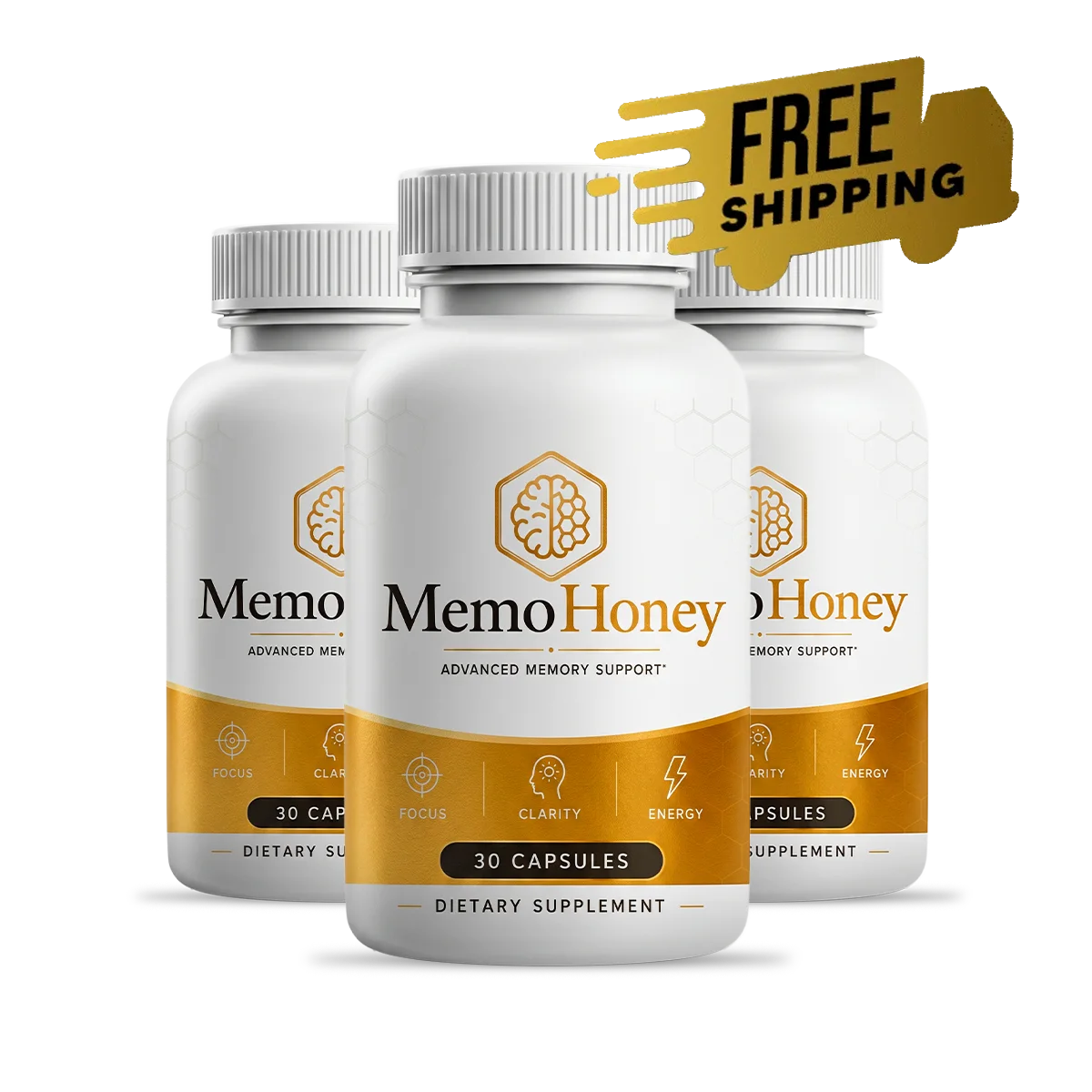
A stimulant-free daily formula, fully disclosed
MemoHoney is one capsule a day with no caffeine and no proprietary blend — every ingredient and amount is printed on the label and transcribed on our main page, next to the current official-store pricing and the 60-day money-back guarantee.
Get OfferFrequently asked questions
How does omega-3 help the brain?
DHA is one of the most abundant fatty acids in brain cell membranes, where it keeps those membranes fluid and helps the junctions between neurons work smoothly. EPA is present in much smaller amounts and is studied mainly for its role in the body's inflammation signalling. Together the two are considered structural and functional building blocks rather than a stimulant, so their contribution is a long-run, background one — not something you feel after a single capsule.
How much DHA do I need for brain health?
For general health, many authorities point to roughly 250 to 500 mg of combined EPA and DHA per day, an amount you can reach from two servings of oily fish a week. Trials that look specifically at cognition have often used higher combined doses, sometimes around one gram or more, but higher is not automatically better and the evidence for a cognitive benefit in healthy people is mixed. Pregnancy and some clinical situations carry their own separate guidance, so treat any high dose as a conversation with a clinician rather than a default.
Fish oil vs algae omega-3 — which is better?
Both deliver the same active fatty acids, so neither is inherently superior for the brain. Fish oil is cheaper per gram and better studied, but quality varies and some people dislike the aftertaste. Algae oil is made directly from the microalgae that fish get their omega-3 from, which makes it the practical choice for vegetarians and vegans; it usually costs more and is often DHA-dominant. Choose on diet, budget, tolerance and third-party purity testing rather than on marketing.
Should I add omega-3 to MemoHoney?
MemoHoney contains no omega-3 at all — its label is built on L-arginine, L-arginine AKG, L-citrulline HCl, L-citrulline malate, beta-alanine and niacin, which work on a different pathway. If your diet is low in oily fish, a separate omega-3 supplement is a reasonable, well-studied addition and the two do not overlap. The one thing to clear first is the blood-thinner caution: if you take anticoagulant or antiplatelet medication, ask your doctor before starting a high-dose fish oil.
References
- NIH Office of Dietary Supplements — Omega-3 Fatty Acids fact sheet.
- National Center for Complementary and Integrative Health (NIH) — Omega-3 Supplements: In Depth.
- American Heart Association — Fish and Omega-3 Fatty Acids.
- Harvard Health Publishing — Foods linked to better brainpower.
- PubMed — published literature on DHA and cognition.